Habitability Notice Legal Requirements: Landlord Guide

TL;DR:
- A habitability notice is a written report from a tenant that details unsafe or unlivable conditions. Landlords must follow strict legal requirements for notices, including specific elements and prompt response times based on severity. Proper delivery and documentation protect landlords from legal disputes and tenant remedies.
A habitability notice is a written communication from a tenant that formally reports a condition making the rental unit unsafe, unsanitary, or unlivable. Understanding habitability notice legal requirements is not optional for landlords. The implied warranty of habitability is a mandatory, non-waivable legal doctrine in virtually every U.S. state, covering heating, running water, plumbing, electrical safety, and structural integrity. The Uniform Residential Landlord and Tenant Act (URLTA) codifies these obligations at the model statute level, and most states have adopted versions of it. Getting notice procedures wrong exposes you to rent withholding, lease termination, and court judgments.
What are the legal requirements for a valid habitability notice?
A legally effective habitability notice must be in writing and contain four specific elements. Verbal communication is insufficient to trigger your statutory repair obligations or start any cure period clock. Courts require documented proof that you received notice of a specific defect before they hold you liable for failing to act.
The four required elements are:
- Date the defect was observed: The tenant must state when they first noticed the problem. This date anchors the timeline for your response obligations.
- Specific description of the condition: Vague language like “the apartment is broken” fails legally. The notice must describe the exact defect, such as “the furnace has not produced heat since November 14.”
- Full property address: The unit number, street address, city, and state must appear on the notice. This matters when you manage multiple properties.
- Landlord contact information as referenced in the lease: The notice should be directed to the authorized landlord or property manager named in the lease agreement.
Specificity is the most common failure point. Most habitability notices fail legally due to vague descriptions. That failure cuts both ways. A vague notice from a tenant may not trigger your legal duty to act, but a vague acknowledgment from you may not protect you in court either.
Pro Tip: Use a standardized tenant defect intake form that prompts tenants to fill in each required field. This produces notices that are legally sufficient and gives you a paper trail from day one. Landlordforms offers templates designed for exactly this purpose.

Verbal complaints do carry some weight in practice. Oral notices may fulfill initial reporting but do not meet statutory proof requirements. If a tenant calls you about a broken heater, follow up immediately with a written acknowledgment that documents the date, the issue, and your planned response. That written record protects you even when the original notice was informal.
What timelines must landlords meet after receiving a habitability notice?
Response timelines under habitability law are not uniform across states, but the URLTA provides a widely adopted baseline. Model statutes specify 5 days for emergency repairs and 14 days for standard habitability violations. Some states set a 7-day window for mid-level repairs, and a few use tiered systems based on severity.
| Defect severity | Typical cure period | Examples |
|---|---|---|
| Emergency | 24–72 hours | No heat in winter, gas leak, sewage backup |
| Urgent | 5–7 days | Broken exterior lock, no hot water |
| Standard | 14 days | Mold remediation, pest infestation |
| Non-urgent | 30 days | Minor structural repairs, worn flooring |
Courts apply a sliding scale based on severity. Emergencies require rapid response, typically within 24–72 hours, while less urgent repairs allow longer windows. A broken furnace in january is an emergency. A cracked window screen in july is not.
“The cure period legally begins the day after confirmed receipt of the notice. Landlords who cannot prove the exact receipt date lose the ability to argue they acted within the required window. Certified mail with return receipt requested removes all ambiguity about when the clock started.”
Failure to act within the required timeline gives tenants legal standing to pursue remedies. Those remedies include repair and deduct, rent withholding, and lease termination, depending on state law. Tenant remedies for landlord inaction are activated by the combination of written notice and landlord failure to respond within the statutory period. Acting promptly is your primary legal defense.
How should landlords deliver and document habitability notices?
Proper delivery creates the legal record that protects you in any dispute. The delivery method determines when the cure period begins and whether you can prove you received notice at all.
-
Certified mail with return receipt requested. This is the industry standard. Certified mail provides verifiable proof of the notice date, which is the anchor for all cure period calculations. Keep the green return receipt card with your property file.
-
Email with read receipt enabled. Many states now accept email delivery when the lease authorizes electronic communication. Enable read receipts and save the delivery confirmation. Screenshot the sent email with timestamps as a backup.
-
Documented in-person handoff. If a tenant delivers a notice in person, sign and date a copy immediately. Give the tenant a copy of the signed acknowledgment. Never accept a notice without creating a written record on the spot.
-
Property management software with timestamped logging. Digital platforms that log maintenance requests with timestamps create an automatic paper trail. This method works well for landlords managing multiple units.
Informal delivery carries serious risk. Documentation of delivery via certified mail or similarly verifiable methods is your primary defense in habitability disputes, outweighing lease clauses that attempt to waive compliance. A lease clause saying “tenant waives the right to written notice” does not hold up in court. The implied warranty of habitability is non-waivable.
Pro Tip: Create a notice log for each property. Every time you receive a habitability complaint, log the date received, the delivery method, the defect described, and your planned response date. A simple spreadsheet works. Landlordforms tracks this automatically with its notice management tools, saving you from reconstructing timelines during a dispute.
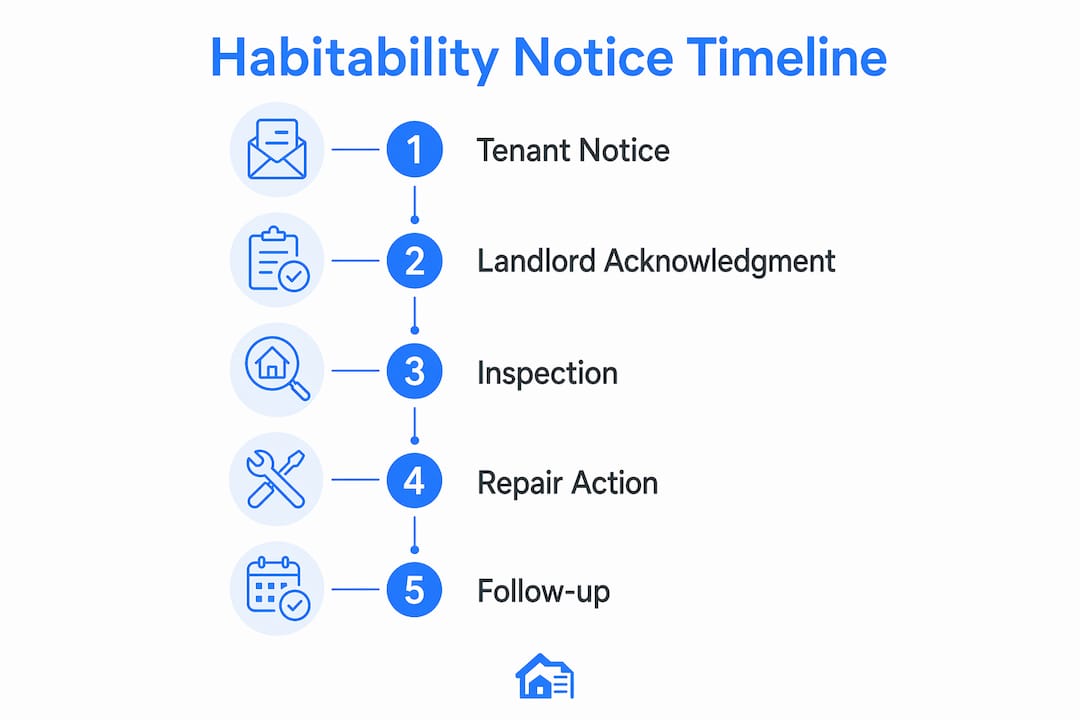
Standardized templates reduce errors significantly. When you use a consistent form for acknowledging notices, you avoid missing required fields and create a professional record that holds up in court. A lease violation notice template can also serve as a model for the structure and language your acknowledgment letters should follow.
What are tenant rights and landlord obligations after a habitability notice?
Once a tenant delivers a valid habitability notice, your legal obligations activate immediately. Habitability is a continuous obligation triggered upon tenant notice, not a one-time checklist item at move-in. You must respond dynamically to new defects throughout the tenancy.
Tenant rights after delivering a valid notice include:
- Repair and deduct: In most states, tenants can hire a contractor to fix the defect and deduct the cost from rent if you fail to act within the cure period. State law typically caps this remedy at one month’s rent.
- Rent withholding: Tenants may withhold rent until the defect is corrected. Many states require tenants to deposit withheld rent into an escrow account to qualify for this remedy.
- Lease termination: For severe habitability failures, tenants can terminate the lease without penalty after proper notice and landlord inaction.
- Legal action: Tenants can sue for damages, including rent paid during the period of uninhabitable conditions, relocation costs, and attorney fees.
Anti-retaliation protections are equally important. Nearly all states shield tenants who assert habitability rights from retaliatory actions. Raising rent, reducing services, or filing an eviction after a habitability complaint can be challenged as retaliation in court. The timing alone creates a legal presumption of retaliation in many states.
Distinguishing habitability defects from general maintenance requests is critical. Ignoring this distinction can cause landlords to lose legal defenses if notices are dismissed as mere nuisances. A broken dishwasher is a maintenance issue. No heat in winter is a habitability defect. The legal consequences of misclassifying the second as the first are severe.
Tenants also carry obligations. Legal protections require tenants to maintain the property and not cause the defects they report. Tenants must also allow you reasonable access to make repairs. A tenant who refuses entry after providing notice may lose their legal remedies entirely.
Key Takeaways
Habitability notice legal requirements demand written documentation, specific defect descriptions, and prompt landlord response within state-mandated cure periods to avoid tenant remedies and legal liability.
| Point | Details |
|---|---|
| Written notice is mandatory | Verbal complaints do not trigger statutory repair obligations or start cure period timelines. |
| Four elements make a notice valid | Include the defect date, specific description, property address, and landlord contact information. |
| Cure periods vary by severity | Emergencies require 24–72 hours; standard repairs allow 14 days under URLTA defaults. |
| Certified mail starts the clock | The cure period begins the day after confirmed receipt, making delivery proof your primary defense. |
| Retaliation is prohibited | Rent increases or eviction filings after a habitability complaint trigger anti-retaliation protections in nearly every state. |
What landlords consistently get wrong about habitability notices
The biggest mistake I see landlords make is treating a tenant’s phone call as sufficient notice. They respond verbally, make the repair, and think the matter is closed. Then six months later, a tenant claims the issue was never properly addressed, and the landlord has no written record to defend themselves. Courts do not accept “I remember fixing that” as evidence.
The second mistake is misclassifying defects. Landlords often categorize a serious habitability issue as a routine maintenance request and apply a 30-day response window. That works fine for a dripping faucet. It does not work for a heating failure in february. Courts look at the actual impact on tenant health and safety, not how you labeled the request internally.
The third mistake is confusing the notice requirement with the repair requirement. Some landlords acknowledge the notice promptly but then delay the actual repair. Acknowledging receipt does not stop the cure period clock. The clock stops when the repair is complete, not when you send a reply email saying you will look into it.
Viewing habitability as an ongoing legal relationship rather than a series of isolated incidents changes how you manage properties. A move-in checklist that documents baseline conditions gives you a reference point for every future notice. When a tenant claims the bathroom has always had mold, your move-in documentation either confirms or refutes that claim.
The landlords who avoid habitability disputes are not the ones who never receive notices. They are the ones who have a clear, documented process for receiving, logging, acknowledging, and resolving every notice they get.
— Igor
Landlordforms templates for habitability compliance
Staying compliant with habitability notice legal requirements takes more than good intentions. You need forms that capture the right information every time.
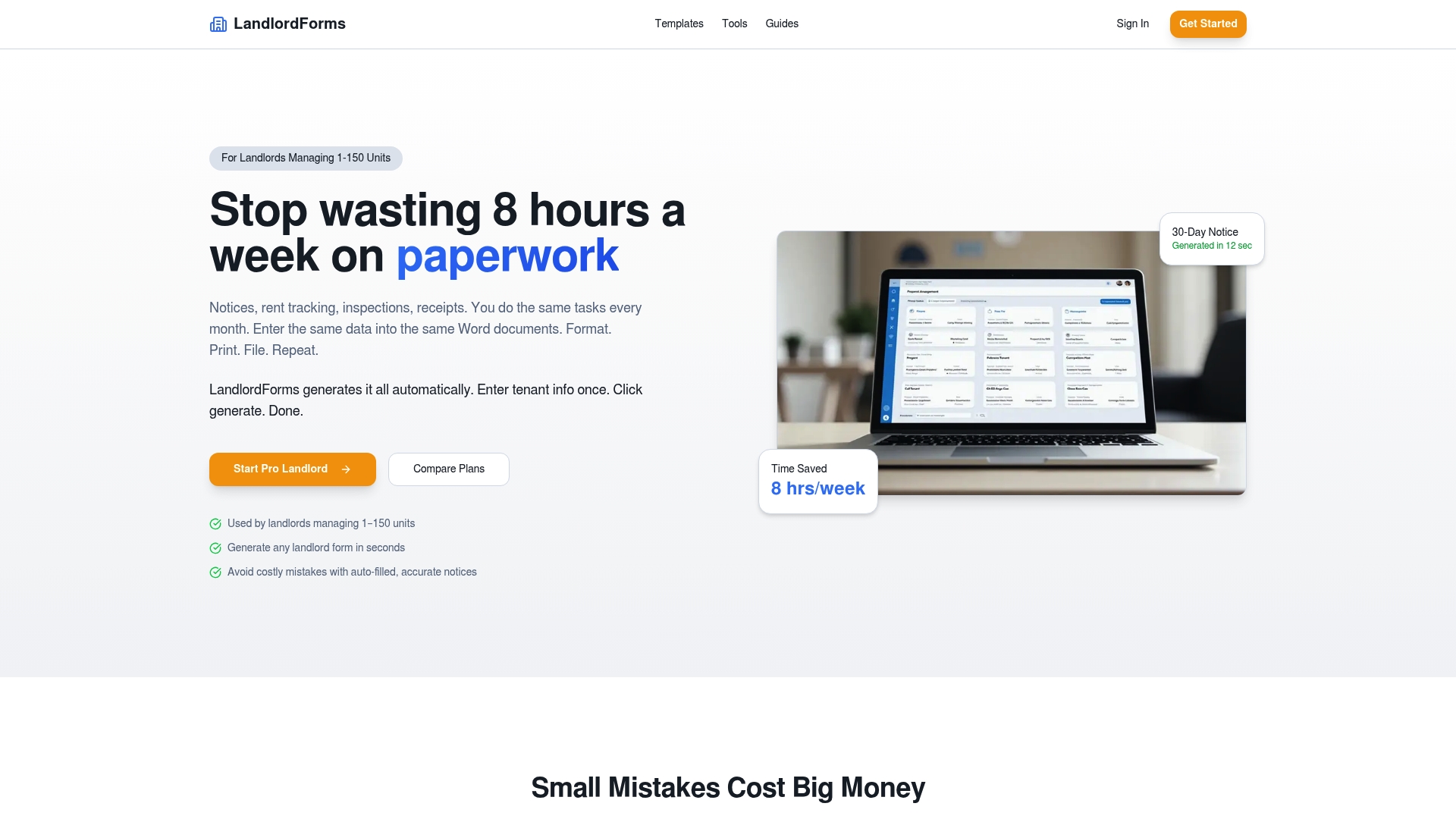
Landlordforms provides free landlord document templates built for exactly this workflow, including notice acknowledgment forms, repair request logs, and tenant communication records. Every template is formatted to capture the legally required fields so nothing gets missed. Landlords managing up to 150 units use Landlordforms to cut paperwork time significantly and keep every notice, deadline, and response in one place. When a dispute arises, your documentation is already organized and ready.
FAQ
What does a habitability notice mean legally?
A habitability notice is a written tenant communication formally reporting a condition that makes the rental unit unsafe or unlivable. It triggers the landlord’s statutory duty to repair within a legally defined cure period.
What does habitability law require landlords to do?
Habitability law requires landlords to maintain safe, sanitary, and livable conditions throughout the tenancy, covering heating, plumbing, electrical safety, and structural integrity. Upon receiving a valid written notice, landlords must act within the cure period specified by state law.
How long does a landlord have to fix a habitability issue?
Cure periods depend on severity and state law. Under URLTA, emergencies require repair within 5 days and standard violations within 14 days. True emergencies like no heat or gas leaks may require action within 24–72 hours.
Can a tenant withhold rent over a habitability issue?
Yes, in most states a tenant can withhold rent after delivering a valid written habitability notice and waiting out the cure period without landlord action. Many states require the withheld rent to be placed in escrow to qualify for this remedy.
What happens if a landlord retaliates after receiving a habitability notice?
Nearly all states prohibit retaliation against tenants who assert habitability rights. Rent increases, service reductions, or eviction filings following a habitability complaint can be challenged as illegal retaliation, exposing the landlord to damages and attorney fee awards.