U.S. Landlords: 14–30 Day Checklist and Forms for Move Out Charges
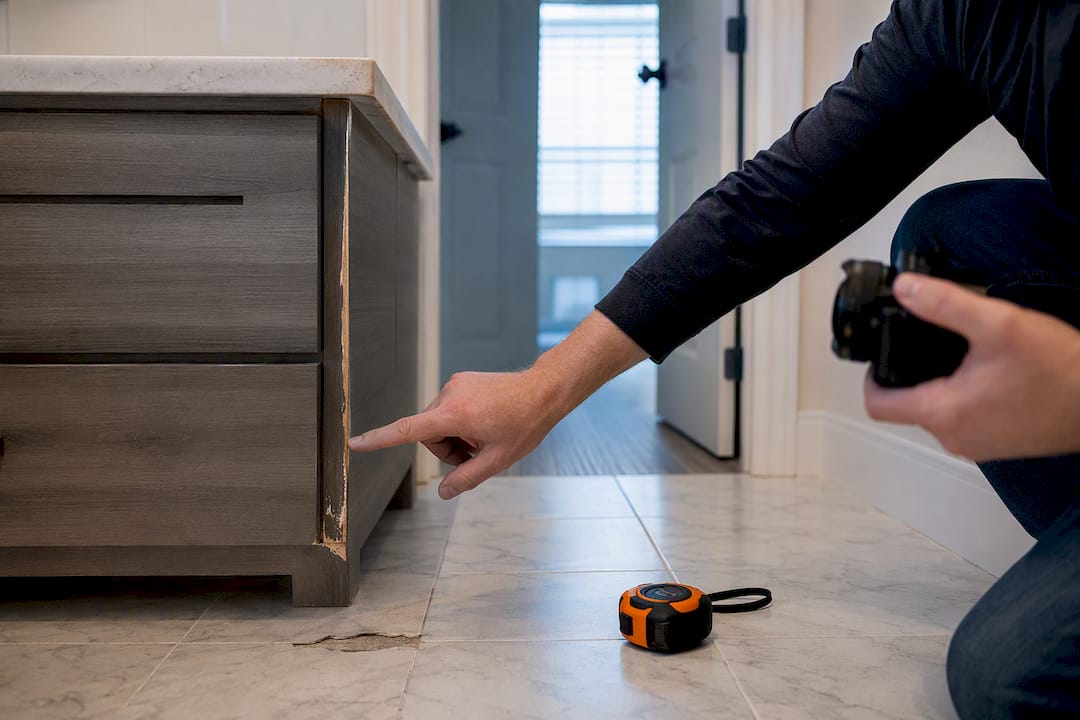
Move out charges are limited to three categories: unpaid rent, tenant-caused damage beyond normal wear and tear, and cleaning needed to restore the unit to its move-in condition. The moment a tenant hands back the keys, walk the unit, photograph everything, and pull up your state’s deposit disposition deadline. Every dollar you deduct later has to trace back to a receipt, an invoice, or a photo taken today.
TL;DR:
- Landlords must attach receipts, invoices, or photos to justify all deductions, especially in states like California, Illinois, and New York.
- Depreciated, prorated costs based on an item’s age are required when charging for damages, not the full replacement cost.
- Deadlines for returning deposits or itemized deductions typically range from 14 to 30 days after move-out, varying by state, and missing them risks penalties.
- Documentation should include signed move-in and move-out reports, matched photos, and detailed repair invoices, all combined into a single proof file.
- Properly handling repairs, communication, and record-keeping can help avoid disputes and potential legal penalties, including forfeiture of deductions.
Table of Contents
- What You Can and Cannot Charge for at Move-Out
- Building a Documentation File That Holds Up
- Deadlines, Delivery, and What Happens if You’re Late
- How to Calculate What You Actually Owe
- When to Settle and When to Go to Small Claims
- Tenant Rights That Limit What You Can Deduct
- Helping Tenants Avoid Charges Reduces Your Disputes Too
- An Author’s Checklist for a Clean Move-Out Turnover
- Landlordforms Templates Built for Move-Out Charges
- Sources
- FAQ
What You Can and Cannot Charge for at Move-Out
Normal wear and tear is the deduction landlords get wrong most often. A carpet that’s faded from sunlight, nail holes from hung photos, or worn spots on a hardwood floor from years of foot traffic are all things a tenant paid rent to use, not damage. Legal guidance is consistent on this point: you should never charge for the ordinary breakdown of materials over time, only for harm that goes beyond it, according to Illinois Legal Aid.
What you can deduct:
- Unpaid rent or unpaid fees specified in the lease
- Repairs for damage a tenant or their guest caused (a cracked window, a burned countertop, pet damage to flooring)
- Cleaning costs to bring the unit back to the condition it was in at move-in, beyond a light refresh
What you cannot deduct:
- Routine turnover cleaning you’d do for any tenant regardless of how they left the place
- Cosmetic upgrades or renovations that improve the unit beyond its original condition
- Pre-existing damage documented on the move-in checklist
A handful of states, including California, Illinois, Maryland, New York, Oregon, and Washington, explicitly require you to attach receipts or invoices to justify each deduction. Skip that step in one of those states and the entire deduction can be thrown out regardless of how legitimate the damage was.
Pro Tip: Keep a running “wear and tear vs. damage” reference sheet for your own units. Photograph a brand-new carpet, a two-year-old carpet, and a five-year-old carpet side by side once, and you’ll never misjudge a deduction again.
Building a Documentation File That Holds Up
An itemized statement without proof is just an opinion. Courts and tenants both treat unsupported deductions as evidence of bad faith, so every line item needs a paper trail attached to it before it goes out the door.
Assemble these documents for each unit you turn over:
- Contractor or handyman invoices for any repair work performed
- Store receipts for materials, annotated to show which item was used for which repair
- Cleaning service receipts, or a labor time log if you cleaned it yourself
- The signed move-in condition report and the signed move-out checklist
- Timestamped before-and-after photos, matched to each specific line item on your statement
Combine everything into a single PDF, in the same order as your itemized statement, so a tenant (or a judge) can flip from a dollar amount straight to the invoice that backs it. Practice guides that specialize in inspection evidence recommend exactly this pairing: signed condition reports plus matched photos plus receipts is the strongest evidence set landlords bring into a dispute, according to DiscoveryMark’s move-out inspection guide.
Statutory penalties for skipping this step are steep. Washington’s deposit statute requires a full and specific statement with copies of estimates or invoices delivered within 30 days, and courts there can award tenants up to two times the deposit if a landlord intentionally withholds that documentation, under RCW 59.18.280. Treat “attach the receipts” as a legal requirement, not a courtesy.
A defensible statement separates every deduction into its own line, shows the underlying math, and attaches proof for that specific item rather than bundling several repairs into one vague total, a standard practice guidance repeatedly emphasizes, per Justia’s landlord guide.
Deadlines, Delivery, and What Happens if You’re Late
Most states give you somewhere between 14 and 30 days after move-out to return the deposit or send an itemized statement of deductions, though the exact window and the penalty for missing it vary by state, according to RenterCalc’s state-by-state breakdown. Some states count from the date you mail the statement (postmark rule); others count from the date the tenant actually receives it. Confirm which rule applies in your state before you assume you have a few extra days of buffer.
- Send the disposition letter by certified mail or another trackable method and keep the receipt
- Email can work in states that permit electronic delivery, but only if you retain a delivery or read confirmation
- Never rely on handing a document to a tenant in person without a signed acknowledgment
Pro Tip: Set a calendar reminder the day you get the keys back, not the day you finish the walkthrough. Deadlines run from move-out, and the itemizing work always takes longer than you think.
Missing the deadline, or sending a vague statement without documentation, doesn’t just cost you the deduction. Depending on the state, courts can order forfeiture of the entire deposit, award double or triple damages, and add the tenant’s attorney’s fees on top, a consequence spelled out clearly in Washington’s statute and echoed across other state landlord-tenant guides. A missed deadline can turn a legitimate $400 repair claim into a $1,200 liability.
How to Calculate What You Actually Owe
Replacement cost and depreciated cost are not the same number, and charging a tenant for a brand-new item when the old one was already ten years old is one of the fastest ways to lose a dispute. Courts consistently favor prorated charges tied to an item’s remaining useful life over flat replacement cost, according to DiscoveryMark’s security deposit guide.
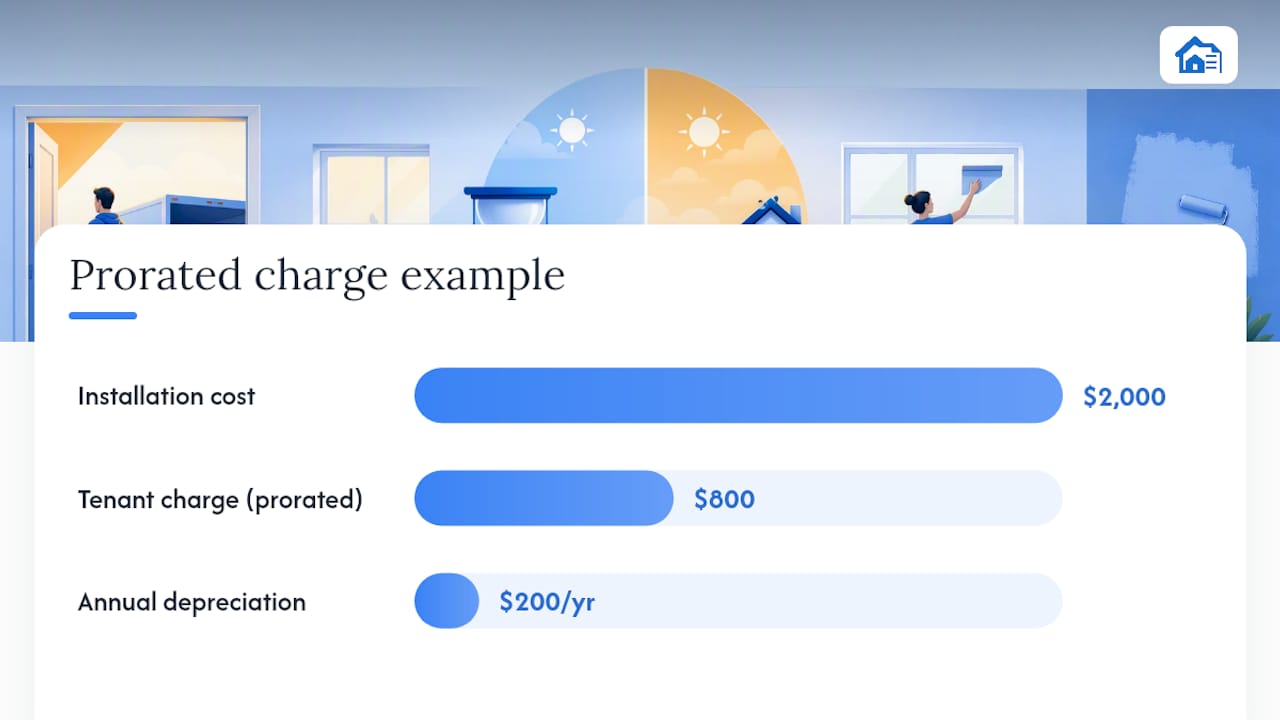
Take carpet as the clearest example. If carpet has an expected 10-year useful life and cost $2,000 to install, it depreciates roughly $200 per year. A tenant who damages it after 6 years has used up 60% of its value, so you can fairly charge the remaining 40%, or $800, not the full replacement cost.
Work through deductions in this order:
- Identify the specific damage and photograph it clearly
- Decide whether it needs repair or full replacement, and justify that choice
- Pull the invoice for repair cost, or calculate prorated replacement cost using the item’s age and expected lifespan
- Attach the receipt or your calculation as proof
- Show the math on the statement itself, not just the final number
If you performed labor yourself instead of hiring a contractor, states that allow self-performed labor charges still expect a contemporaneous log: date, task, hours spent, and an hourly rate that matches market comparables for that kind of work. A rate you pulled out of thin air won’t survive a dispute the way a documented, comparable rate will.
When to Settle and When to Go to Small Claims
Most deposit disputes never need a courtroom. A written settlement, even a partial refund, is almost always cheaper than litigation, and several states let tenants recover double or triple the deposit plus attorney’s fees if a court decides you withheld it in bad faith, per the Texas State Law Library’s security deposit guide.
- Offer a partial refund early if your documentation has any gaps, and get a signed release stating the matter is fully resolved
- Consider mediation before either side files anything. It’s faster and cheaper than court for both parties
- If a tenant threatens legal action, insist any settlement includes written dismissal language, not just a verbal agreement
If it does go to small claims, bring the full file: paired before-and-after photos, every invoice and receipt, the signed move-in and move-out checklists, and proof you mailed the disposition letter on time. A judge who sees a matched, dated evidence trail rules very differently than one looking at a landlord’s word against a tenant’s.
Tenant Rights That Limit What You Can Deduct
Tenants aren’t defenseless against improper deductions, and knowing their protections helps you avoid the disputes that turn into lawsuits. Most states cap what you can withhold to actual, documented losses, meaning a tenant can demand an itemized accounting, not just a lump-sum deduction from their deposit.
Tenants generally have the right to:
- Receive an itemized statement within their state’s deadline, with receipts or invoices attached where required
- Dispute deductions they believe are for normal wear and tear rather than actual damage
- Request a copy of the signed move-in condition report to compare against your move-out claims
- Pursue statutory damages, sometimes double or triple the withheld amount plus attorney’s fees, if a court finds you withheld the deposit in bad faith
Some states also require landlords to hold deposits in separate, sometimes interest-bearing accounts, and to disclose where the money is held at the start of the tenancy. Failing to do that can undermine your position even before a dispute over damage begins.
The practical takeaway for you: every protection a tenant has doubles as a checklist for what a court will ask you to prove. If you can already produce the itemized statement, the receipts, and the signed condition reports a tenant is entitled to see, you’ve already built your defense.
Helping Tenants Avoid Charges Reduces Your Disputes Too
A tenant who knows exactly what’s expected at move-out is far less likely to leave damage behind, and far less likely to fight your final statement. It’s worth handing over a short move-out prep list along with the notice to vacate.
Encourage tenants to:
- Compare the unit against their signed move-in checklist and address any new damage before they leave
- Clean the unit to the same standard it was in at move-in, focusing on kitchens, bathrooms, and flooring
- Patch small nail holes and touch up paint scuffs, which often heads off a full repainting charge
- Photograph the unit themselves before returning keys, in case there’s ever a disagreement over condition
- Report any maintenance issues during the tenancy instead of waiting until move-out, since unresolved requests can shift responsibility back to you
A tenant who does these things costs you less to turn over, and a tenant who feels the process was fair is far less likely to dispute a legitimate charge or leave a bad review. That’s worth more than the extra hour of cleaning you might have collected on.
An Author’s Checklist for a Clean Move-Out Turnover
Here’s the sequence I’d run for every unit, in order: walk the unit with the signed move-in checklist in hand, photograph every room before touching anything, and get the tenant to sign a move-out acknowledgment if they’re present. Collect contractor and cleaning receipts as they come in rather than scrambling for them later. Calculate each deduction with its own math, attach every receipt and photo to the matching line, and mail the finished statement with delivery proof well before your state’s deadline.
A move-out documentation checklist built around this order catches the gaps a rushed turnover misses, and matching each photo to a line item on the statement is what actually holds up if a tenant pushes back.
Landlordforms Templates Built for Move-Out Charges
You already know the drill by now: itemized statement, receipts attached, sent before your state’s deadline. Landlordforms turns that checklist into a few clicks instead of a scramble through email attachments and old text messages.

Start with the move-in move-out checklist template to create the baseline condition report every deduction depends on, then use the security deposit return letter template to generate a properly itemized disposition statement with your state’s deadline already accounted for. If unpaid rent is part of what you’re deducting, the rent ledger template keeps a running record of what’s owed so the number on your statement matches what you can actually prove. Landlords who dig receipts out of a shoebox after the fact are the ones who end up with vague, bundled statements that don’t survive a dispute. Pull up the Rent Proration Calculator next time you’re closing out a mid-month move-out, and build the habit of documenting as you go instead of reconstructing it later.
Sources
- Texas State Law Library — Security deposits guide
- Washington RCW 59.18.280
- Justia — Moving tenants out and returning security deposits
FAQ
Can I Charge a Tenant for Carpet Replacement?
Only the prorated, depreciated value based on the carpet’s remaining useful life, not the full cost of new carpet, since courts generally reject full replacement charges for aging materials.
How Long Do I Have to Return a Security Deposit?
Deadlines commonly run within a few weeks depending on your state, and states count from either postmark date or delivery, so confirm your state’s exact rule.
What Happens if I Miss My State’s Deposit Deadline?
You can forfeit the right to deduct anything, and some states allow tenants to recover multiple times the deposit plus attorney’s fees for bad-faith withholding, as Washington’s statute makes explicit.
Do I Need Receipts to Deduct Cleaning Costs?
Several states, including California, Illinois, Maryland, New York, Oregon, and Washington, explicitly require receipts or invoices to substantiate any deduction, and it’s good practice everywhere else regardless.
What’s the Difference Between Damage and Normal Wear and Tear?
Wear and tear is the expected decline from ordinary use, like faded paint or worn carpet paths, while damage goes beyond that, like burns, holes, or broken fixtures caused by neglect or misuse.
Can Landlordforms Help Me Generate an Itemized Statement?
Yes. The security deposit return letter template on Landlordforms builds a properly itemized statement you can attach receipts and photos to before sending it within your state’s deadline.