What Is a Cure or Quit Notice and When Should You Serve One?

A cure or quit notice is a written demand telling a tenant to fix a specific lease violation by an exact calendar deadline or move out. It is not an eviction. It is the required warning shot before one.
Statutory windows swing widely depending on state laws, so your first move is checking your own state’s code before you write a single word of it.
- Identify the exact lease clause the tenant violated
- Set a real calendar date and time, not “within 5 days”
- Choose a service method your state actually recognizes
- Keep proof of everything you send
Cure periods range from 3 to 30 days depending on the state, and getting that number wrong is one of the fastest ways to lose an eviction case before it starts.
Key Takeaways
A cure or quit notice only holds up in court when it names the exact lease clause, states a calendar deadline, and proves it was served correctly.
| Point | Details |
|---|---|
| Definition matters | A cure or quit notice demands a fix by a deadline or vacancy; it is not itself an eviction filing. |
| Cure periods vary by state | Windows range from 3 days in California to 30 in DC, and some states defer to the lease. |
| Precision beats tone | Vague cure language and missing calendar dates cause more dismissals than weak wording. |
| Documentation wins cases | Proof of service, dated incident logs, and photos matter more in court than firm language. |
| Landlordforms speeds compliant drafting | Its templates auto-calculate deadlines and centralize proof-of-service records for landlords managing 1 to 150 units. |
Table of Contents
- How Does a Cure or Quit Notice Fit Into the Eviction Process?
- Which Lease Violations Actually Qualify for a Cure Notice?
- What Must a Cure or Quit Notice Include to Hold Up in Court?
- How Long Does a Tenant Have to Cure a Lease Violation?
- What Are the Valid Ways to Serve a Cure or Quit Notice?
- What Happens After the Cure Deadline Passes?
- What Mistakes Most Often Get a Cure Notice Thrown Out?
- How Templates and Automation Reduce Notice Errors
- Editorial Take: What the Research Actually Supports
- Draft Notices Faster Without Missing a Required Field
- Where to Verify Your State’s Rules
- Sources
- FAQ
How Does a Cure or Quit Notice Fit Into the Eviction Process?
Cornell Law’s Wex defines a cure or quit notice as a written demand giving a tenant a set window to correct a lease violation or vacate, a step most states require before a landlord can file an unlawful detainer action. It’s a warning with a legal effect, not a courtroom filing.
It sits alongside two other notice types, and confusing them is a common early mistake:
- Pay or quit notice: addresses unpaid rent specifically, with its own shorter statutory clock in most states
- Unconditional quit notice: skips the change to fix anything, used for severe or repeat violations
- Cure or quit notice: covers everything else curable, like unauthorized pets, noise complaints, or a lease covenant broken
Most jurisdictions build the cure step in on purpose. Courts want proof the tenant had a real chance to correct behavior before losing housing over it.
Which Lease Violations Actually Qualify for a Cure Notice?
Not every problem is curable, and serving the wrong notice type wastes your statutory clock. Curable violations tend to be behavioral or fixable: an unregistered pet, an unauthorized occupant, excess noise complaints from neighbors, or property damage that can be repaired.
- Unauthorized pet or roommate living in the unit
- Repeated noise or nuisance complaints from other tenants
- Property damage that a repair or cleanup can resolve
- Minor lease covenant breaches, like an unapproved home business
Non-curable violations, like criminal activity on the premises, serious safety threats, or severe repeated breaches after prior warnings, often justify an unconditional quit notice instead. Your lease language matters here more than most landlords realize. If the lease doesn’t clearly define the breach you’re citing, a judge may find the notice too vague to enforce, regardless of how obvious the violation seems to you.
What Must a Cure or Quit Notice Include to Hold Up in Court?
California’s court self-help system lists the 3-day notice to perform covenants or quit among the standard eviction notice types and stresses that correct form and content are what separate an enforceable notice from a dismissed case. A checklist beats a paragraph here. Build the notice in this order:
- Full legal names of every adult tenant listed on the lease, plus the complete unit address
- The exact lease clause you’re citing, quoted directly rather than paraphrased
- Dated factual incidents, with times where relevant, describing what happened and when
- The specific cure required, described concretely (remove the dog by a date, repair the damaged wall, stop the noise)
- A calendar-date deadline, with a time if your state requires one, never “within X days”
- The consequence statement, spelling out that failure to cure by the deadline leads to lease termination and possible eviction filing
- A no-waiver clause, noting that accepting partial payment or performance doesn’t waive your right to enforce the notice
- A proof-of-service block, recording the method, date, and who received or witnessed delivery
Practitioner guidance on drafting these notices emphasizes linking every factual allegation to the specific lease clause it violates, since generic language is the single fastest way to weaken enforceability in front of a judge.
Pro Tip: Write the cure instruction as if a stranger with no context has to execute it. “Stop violating the lease” is not a cure. “Remove the unauthorized dog from Unit 4B by 5:00 PM on the deadline date” is.
How Long Does a Tenant Have to Cure a Lease Violation?
Cure periods are not uniform, and guessing costs you. A compiled review of state cure-period statutes shows the spread clearly.
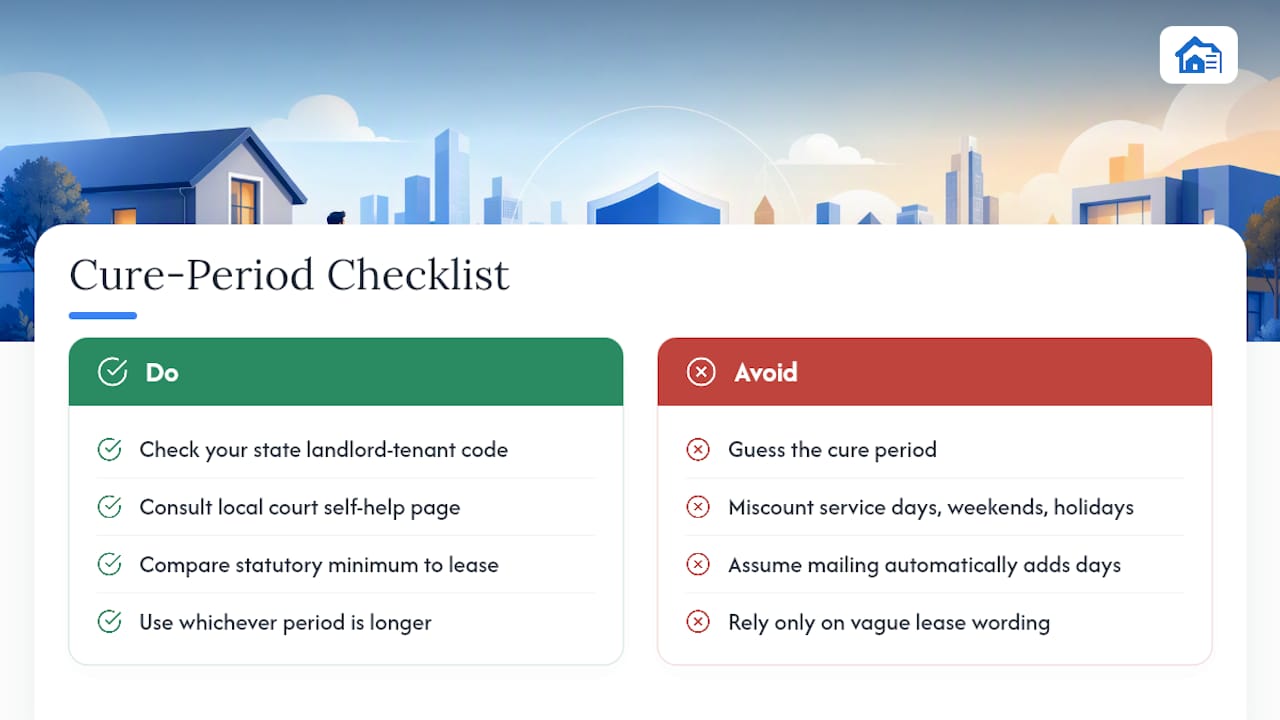
Some states leave the timeline entirely to what the lease says, which means your lease drafting matters as much as your notice drafting.
Counting the days correctly is where landlords trip up most. Does the day of service count? Are weekends and judicial holidays included? Does mailing the notice add extra days beyond the stated cure period? A single miscounted day is enough to void the entire eviction filing later. The safe process: check your state’s landlord tenant code or your local court’s self-help page, compare the statutory minimum against whatever your lease specifies, and use whichever period is longer. Then write an actual calendar date on the notice, not a countdown.
What Are the Valid Ways to Serve a Cure or Quit Notice?
Service method matters as much as content. Most states recognize a hierarchy: personal delivery to the tenant first, substituted service to another adult at the unit if personal delivery fails, then posting on the door combined with mailing a copy where the statute allows it. Certified mail with a return receipt is often acceptable as a backup method when the statute permits it.
- Personal delivery, handed directly to the tenant
- Substituted service to another adult resident, followed by mailing
- Posting on the unit door plus first-class or certified mail
- Certified mail with return receipt, where state law allows it as a standalone method
Documentation matters just as much as the delivery itself. Keep signed receipts, photograph the notice taped to the door with a timestamp, save certified-mail return slips, and log the date and time you or your server made contact.
Email or text service usually only counts if the lease explicitly permits electronic notice or your state statute allows it. Don’t rely on it as your only method unless you’ve confirmed that in writing.
Pro Tip: If personal delivery fails on your first attempt, don’t wait around hoping the tenant answers the door tomorrow. Move immediately to the statutory fallback method and document both attempts with timestamps.
What Happens After the Cure Deadline Passes?
Three outcomes are possible once the deadline hits, and each calls for a different response.
- Full cure: Document it. Photograph the corrected condition and, where practical, get a signed acknowledgment from the tenant confirming the issue is resolved.
- Partial cure or a factual dispute: Preserve every text, email, and note from the exchange. A documented short extension can sometimes be the smarter move if the tenant is clearly making a good-faith effort.
- No cure at all: Start assembling your eviction filing. You’ll need the lease, the notice itself with proof of service, any prior warnings, an incident log, and photos. If the stakes are high or the tenant is contesting the violation, bring in a landlord tenant attorney before you file.
Whatever the outcome, the file you build now is the file a judge reads later.
What Mistakes Most Often Get a Cure Notice Thrown Out?
The same handful of errors show up in dismissed eviction filings again and again. Getting the tenant’s name wrong, or omitting one of several adult occupants, is an easy one to avoid but a common one to make. Vague cure language (“clean up your mess”) gives a judge nothing concrete to enforce. Writing “within 5 days” instead of a specific calendar date invites a counting dispute. Miscounting the days themselves, using the wrong service method for your state, or accepting rent after serving the notice without a written reservation of rights can all undo months of paperwork in a single hearing.
Before handing over or mailing any notice, reread it against your state’s statute one more time, confirm every name and date, and check that your cure instruction could be understood by someone with zero context. After service, keep every receipt, photo, and log entry in the tenant’s file, not scattered across email threads and drawers. This kind of documentation habit pays off the moment a case goes to court.
How Templates and Automation Reduce Notice Errors
Most invalid notices fail for the same reason: a missing field, a vague cure instruction, or a miscounted deadline. A structured lease violation notice template forces those fields in before you can skip them, tenant name, lease clause citation, and a calculated deadline based on your state’s cure period rather than a guess.
- Preformatted fields prevent the “wrong name” and “vague cure” errors that sink notices in court
- Automatic deadline calculation removes the manual counting mistakes that void filings
- Centralized storage for photos, signed receipts, and message history keeps your evidence in one place instead of scattered across phones and inboxes
For a landlord juggling a handful of units, or a property manager overseeing 150, the real savings shows up the day you actually need the file in court, not just the day you draft the notice. If you’re deciding whether a chronic-violation property is worth keeping at all, that’s a separate conversation worth having, and resources on selling a rental with problem tenants walk through that decision.
Editorial Take: What the Research Actually Supports
Most advice on cure or quit notices focuses on the wrong thing. Landlords search for the “right words” to scare a tenant into compliance, when the research points somewhere else entirely: courts don’t care how firm your language sounds, they care whether the notice has an exact deadline, a quoted lease clause, and provable service. Vague toughness loses. Precision wins.
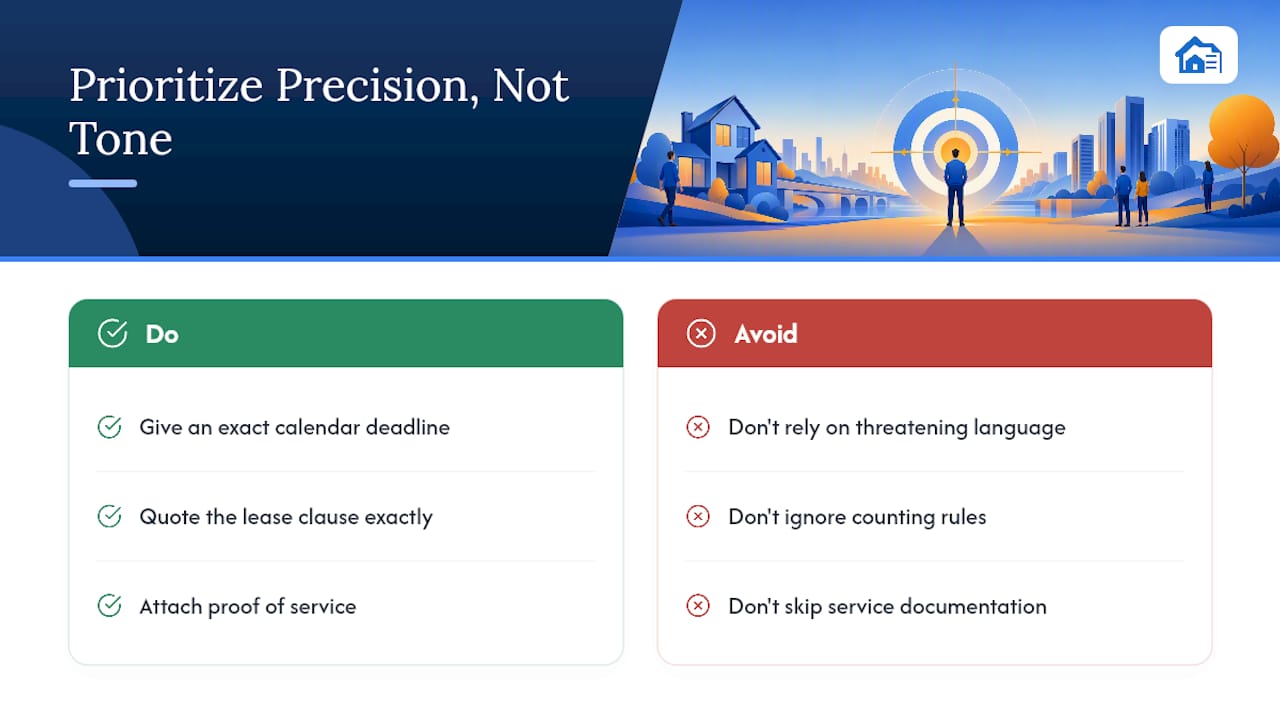
The conventional wisdom also undersells how often a one-day counting error kills an otherwise solid case. Landlords spend hours agonizing over tone and almost none double checking whether their state counts weekends or requires extra days for mailing. That imbalance is backwards. Tone barely matters to a judge. The calendar does.
If you take one thing from this article, prioritize the boring parts first: the exact date, the specific clause, the proof of service. Everything else, including how many chances you give a tenant beyond what the law requires, is a judgment call you can afford to get slightly wrong. The deadline and the paperwork trail, you cannot.
— Igor
Draft Notices Faster Without Missing a Required Field
Landlordforms turns a task that eats an evening (cross-checking your state’s cure period, formatting the clause citation, calculating the exact deadline) into a form you fill out once. Unlike drafting from a generic online template, the fields are built around what courts actually require: tenant names pulled from your lease record, deadline math based on your state’s statute, and a proof-of-service section that doesn’t let you skip it.
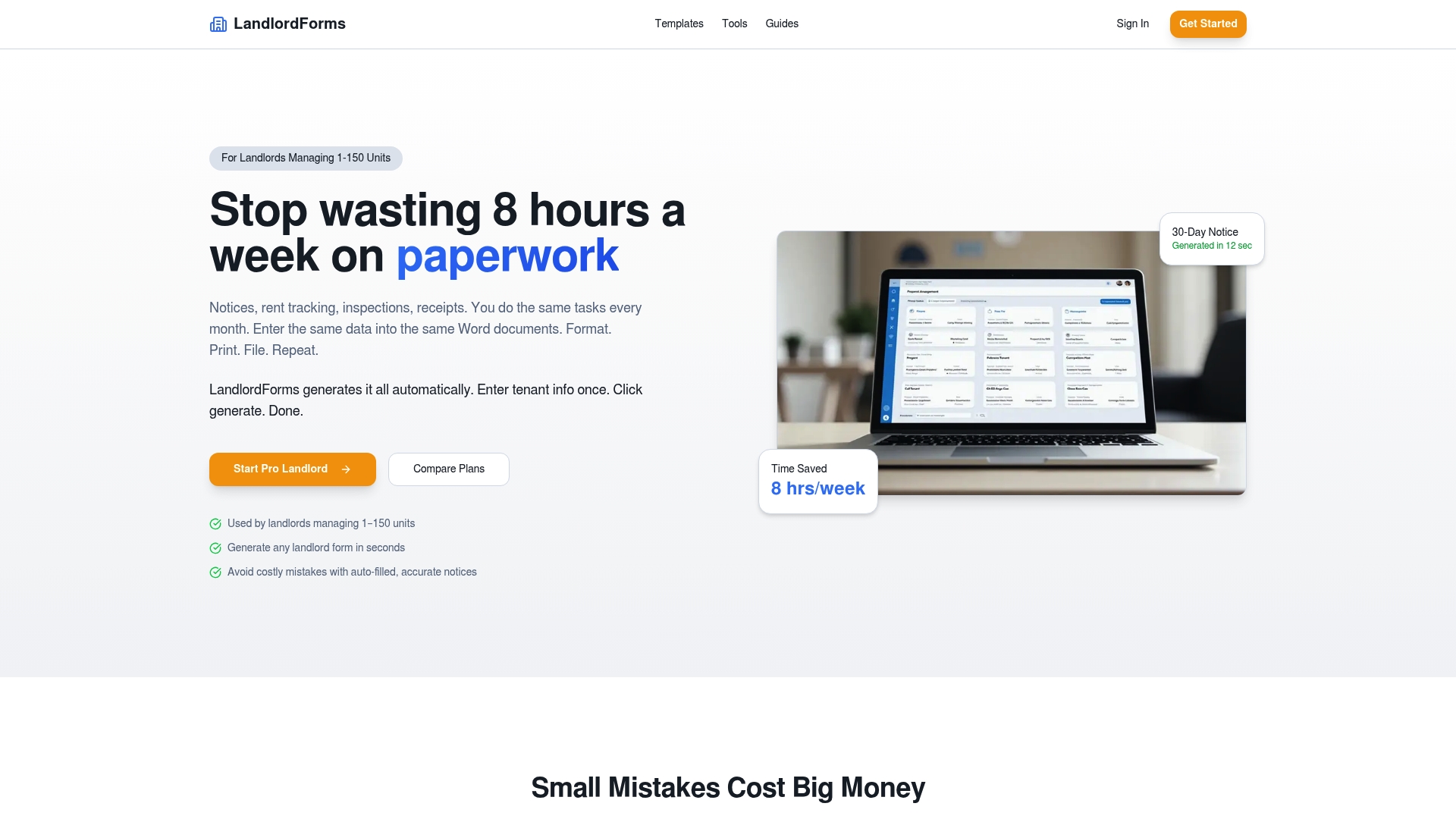
If you’re managing anywhere from a single rental to 150 units, that time adds up fast, especially during a dispute when you’re drafting under pressure instead of at your own pace. The platform also keeps your rent ledger and payment history in the same place as your notices, so if a cure dispute turns into a rent dispute, you’re not hunting through email for receipts. Start by generating your next lease violation notice and see the deadline calculated automatically instead of doing the math by hand.
Where to Verify Your State’s Rules
- Cornell Law’s Wex for the core legal definition
- California Courts self-help for notice-type guidance
- HUD’s tenant rights resources when federal rental assistance programs apply
Sources
- cure or quit | Wex | U.S. Legal Definitions (Cornell Law / LII)
- Choose the right type of eviction notice (California Courts self-help)
- Notice to Cure: The Complete Landlord’s Guide (DiscoveryMark)
- Lease violation notice: Free cure or quit template (ClearLegalTips)
FAQ
What Are Common Mistakes in a Quit Notice?
The most frequent errors are misspelling or omitting a tenant’s name, vague cure instructions, listing a countdown instead of a calendar date, and using a service method your state doesn’t recognize.
What Is a 3-Day Notice to Cure or Quit in California?
It’s California’s standard notice for covenant breaches other than nonpayment, giving the tenant three days to fix the violation or move out, as outlined by California’s court self-help system.
Is an Eviction Notice the Same as a Notice to Quit?
No. A notice to quit, including a cure or quit notice, is a required warning step; the eviction itself is a separate court filing (unlawful detainer) that follows only if the tenant fails to comply.
What Does a 7-Day Notice to Cure Mean?
It means the tenant has seven calendar days, the statutory period used in states like Florida, to correct the specific lease violation named in the notice before the landlord can pursue termination.
Can a Template Help Me Avoid Notice Errors?
Yes. A structured template like the one Landlordforms offers pre-builds the required fields and calculates the deadline based on your state’s rules, cutting down on the manual errors that void notices in court.