3 Ready Lease Renewal Letter Templates for Landlords

A lease renewal letter is a one-page formal offer to extend a tenant’s lease, spelling out the new term, rent, and a deadline to respond. The immediate next step: pull a ready-made template, fill in your dates and numbers, set a firm reply deadline, and send it through a method that leaves a paper trail.
TL;DR:
- Sending a lease renewal letter 60 to 90 days before expiration ensures sufficient response time and compliance with local notice laws.
- Including specific rent amounts, exact dates, and clear response instructions prevents disputes and ensures legal clarity.
- Using the correct template format depends on whether there is no rent change, a rent increase, or a shift to month-to-month tenancy for legal accuracy.
- Documented proof of delivery, such as certified mail or email timestamps, protects against later disputes over receipt.
- Finalizing a renewal requires obtaining a signed agreement, especially when terms involve rent increases or changes in tenancy type.
Table of Contents
- Where to Get a Lease Renewal Letter Template Fast
- What Should a Lease Renewal Letter Include?
- When Should You Send a Lease Renewal Notice?
- Should You Even Offer a Renewal? What to Decide First
- How Do You Send and Confirm Delivery of the Letter?
- What Happens After You Send the Offer?
- Three Ready-to-Use Lease Renewal Letter Templates
- Why We Build Renewal Tools This Way
- Try the Free Lease Renewal Template Now
- Sources
- FAQ
Where to Get a Lease Renewal Letter Template Fast
You don’t need to draft this from scratch. Three formats cover almost every landlord situation, and picking the wrong one just means more editing later.
- Copy-paste sample: best if you’re comfortable customizing wording yourself and just need the structure right.
- Free PDF generator: fastest option. LandlordForms’ Lease Renewal Notice Template fills in your fields and outputs a formatted, professional document in minutes.
- Editable Word document: useful if your management company has house style rules or needs to route the letter for internal review before it goes out.
Match the template to the scenario. A tenant staying at the same rent needs the simplest version. A rent increase requires numeric clarity, since vague language here causes disputes later. A shift to month-to-month needs its own wording because it changes the legal nature of the tenancy, not just the price.
Whichever format you use, every bracketed placeholder, unit number, dollar figure, and date, needs to match your actual lease. A generic template with one stale field is worse than no template at all, because it looks careless to the one person you need to trust the letter.
What Should a Lease Renewal Letter Include?
Skip any of these and you risk a letter that’s legally vague or easy for a tenant to ignore. Property management sites and template hosts converge on the same core components for a renewal letter, and for good reason: each one closes a gap that causes disputes later.
- Date of the letter. This anchors your notice period and matters if a dispute over timing ever comes up.
- Full names of the landlord (or management company) and every tenant on the current lease.
- Property and unit address, written exactly as it appears on the existing lease.
- Reference to the current lease, including its start date and exact expiration date.
- A clear renewal offer, with the new term’s start and end dates stated plainly, not implied.
- Updated rent amount and any other changed terms: pet fees, parking charges, utility responsibilities, pool access, or house rules.
- A response deadline, with explicit instructions on how to accept (signature, email reply, portal click) and what happens if the tenant does nothing.
- Signature lines for both parties, plus a note on how you’ll store the signed copy.
A lease renewal letter is fundamentally a formal offer to extend the relationship on updated terms, not a legally binding amendment on its own. That distinction matters for step eight: the letter proposes terms, but you still need a signed renewal agreement once the tenant agrees.
Pro Tip: Keep every rent-change term as a specific number, never “a modest increase” or “market rate.” Tenants who get vague numbers ask more questions, stall longer, and are more likely to shop around before signing.
Before you finalize wording on fees or policies, run it past HUD’s Fair Housing Act guidance to confirm nothing in your terms could read as targeting a protected class, even unintentionally.
When Should You Send a Lease Renewal Notice?
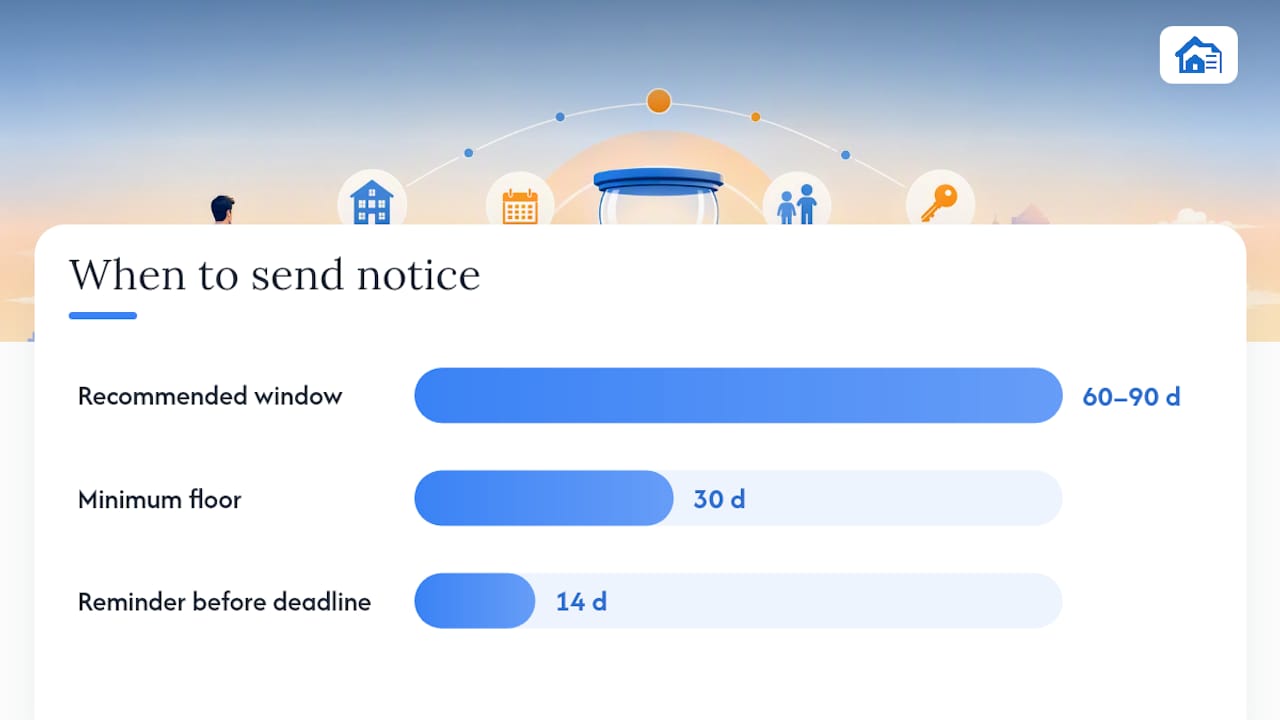
Send it 60 to 90 days before the lease ends. That’s the window most property management guides recommend, though some allow 30 days as a floor depending on your lease language and local landlord tenant law.
Two things can quietly override your preferred timeline:
- Automatic renewal clauses. If your current lease auto-renews unless either party gives notice by a set date, missing that date can lock you into another full term whether you meant to or not.
- State and local notice requirements. Some jurisdictions mandate a minimum notice period for rent increases or non-renewals, and it’s not always the same number as your lease says.
A practical send schedule looks like this:
- Day 0 (60 to 90 days out): send the initial renewal offer with full terms and deadline.
- Two weeks before the deadline: send a short reminder if you haven’t heard back.
- Deadline day: act on whatever the lease or your notice specifies, whether that’s treating silence as a decline or converting to month-to-month.
Check your specific clauses and any state notice rules before locking in dates, since getting timing wrong is the single most common way renewal letters go sideways.
Should You Even Offer a Renewal? What to Decide First
Before you draft anything, decide what you actually want from this tenant. A renewal letter is easy to write; the harder call is whether to send one at all, and on what terms.
- Weigh turnover cost against a rent bump. Vacancy, cleaning, marketing, and screening a new tenant often cost more than a modest increase would gain you.
- Check market rent before setting your number, so you can justify an increase with data rather than a guess.
- Pick term length deliberately. A fixed year gives you predictable income; month-to-month gives you flexibility to adjust price or exit faster, at the cost of stability.
- Consider a small incentive for a reliable tenant, like a minor repair or a capped increase, if keeping them costs less than replacing them.
- Set your own internal deadline to prep the signed agreement once they accept, so acceptance doesn’t sit in your inbox for two weeks.
A tenant with a clean payment history, tracked in something like a rent ledger, is worth more to you than the spread between their current rent and this year’s market rate. Retention math rarely favors squeezing every dollar out of a tenant you’d hate to replace.
How Do You Send and Confirm Delivery of the Letter?
How you send the letter matters almost as much as what it says, because you need proof it was received if anything gets disputed later.
- Email with a PDF attached works well for tenants who are responsive digitally, and it timestamps automatically.
- Certified mail creates a signed receipt, which matters if you anticipate any pushback on terms.
- Hand delivery with a signed acknowledgment works for smaller properties where you see tenants regularly.
Whichever method you choose, documented delivery protects you if a tenant later claims they never got the offer. Save the timestamp, a copy of the letter, any delivery receipt, and every follow-up email in one file per unit.
Pro Tip: If you haven’t heard back within a week of your reminder, call. A two-minute conversation resolves more stalled renewals than a third written notice ever does.
What Happens After You Send the Offer?
Sending the letter is the easy part. What you do with each response determines whether the next 12 months run smoothly.
- If they accept: get the signed renewal agreement or lease amendment executed, and give both parties a copy.
- If they want to negotiate: put every counteroffer in writing, set a firm decision deadline, and never let a rent number or move-in date live only in a phone call.
- If they go silent: follow exactly what your lease specifies, whether that’s an automatic month-to-month conversion or treating non-response as a decline.
- If they decline outright: send move-out instructions immediately and start re-marketing the unit, since every idle day is lost rent.
Three Ready-to-Use Lease Renewal Letter Templates
Here are three short templates you can adapt directly. Replace every bracketed field with your lease’s actual data before sending.
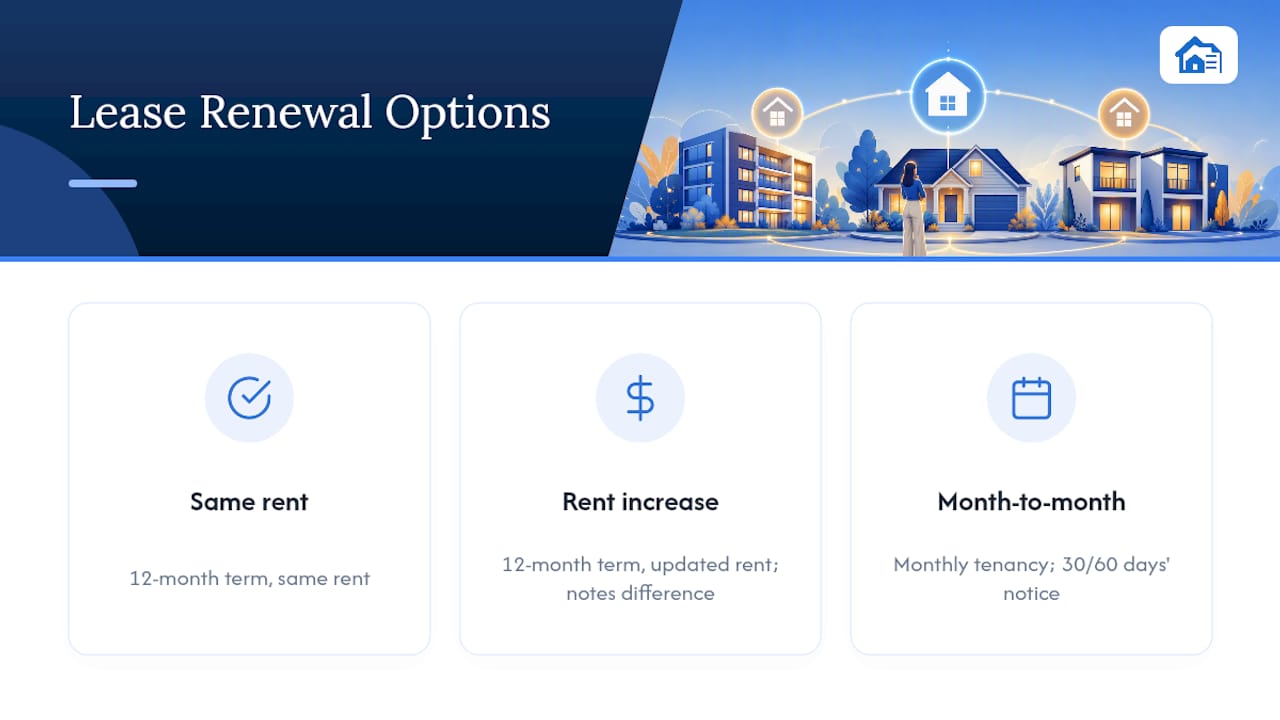
Template 1: Straight renewal, no rent change “Dear [Tenant Name], your current lease for [Property Address] expires on [Date]. We’re pleased to offer a renewal for a new [12 month] term beginning [New Start Date] at the same rent of [$Amount]/month. Please confirm your intent to renew by signing below and returning this letter by [Response Deadline].”
Template 2: Renewal with a rent increase “Dear [Tenant Name], your lease expires on [Date]. We’d like to offer a renewal for [12 month] term starting [New Start Date] at an updated rent of [$New Amount]/month, an increase of [difference] from your current rate. Please respond by [Response Deadline] to accept these terms.”
Template 3: Conversion to month-to-month “Dear [Tenant Name], as your lease term ends on [Date], we’re offering to continue your tenancy on a month-to-month basis at [$Amount]/month, beginning [Date]. Either party may terminate with [30/60] days’ written notice. Please confirm by [Response Deadline].”
If the new term involves a rent bump, pairing your letter with a rent increase notice keeps the paperwork consistent with your local notice requirements.
Why We Build Renewal Tools This Way
We built LandlordForms because renewal season shouldn’t eat a whole weekend. Every hour spent reformatting a Word document or hunting for last year’s rent figure is an hour not spent screening applicants or fixing a leaky faucet. Our Lease Renewal Notice Template exists to cut that friction: fill in the fields once, get a consistent, professional document every time, and reduce the small copy-paste errors that turn into disputes six months later.
— Igor
Try the Free Lease Renewal Template Now
You could keep reformatting last year’s letter in Word and hoping you didn’t forget to update the rent field. Or you could use a generator built specifically for this task.
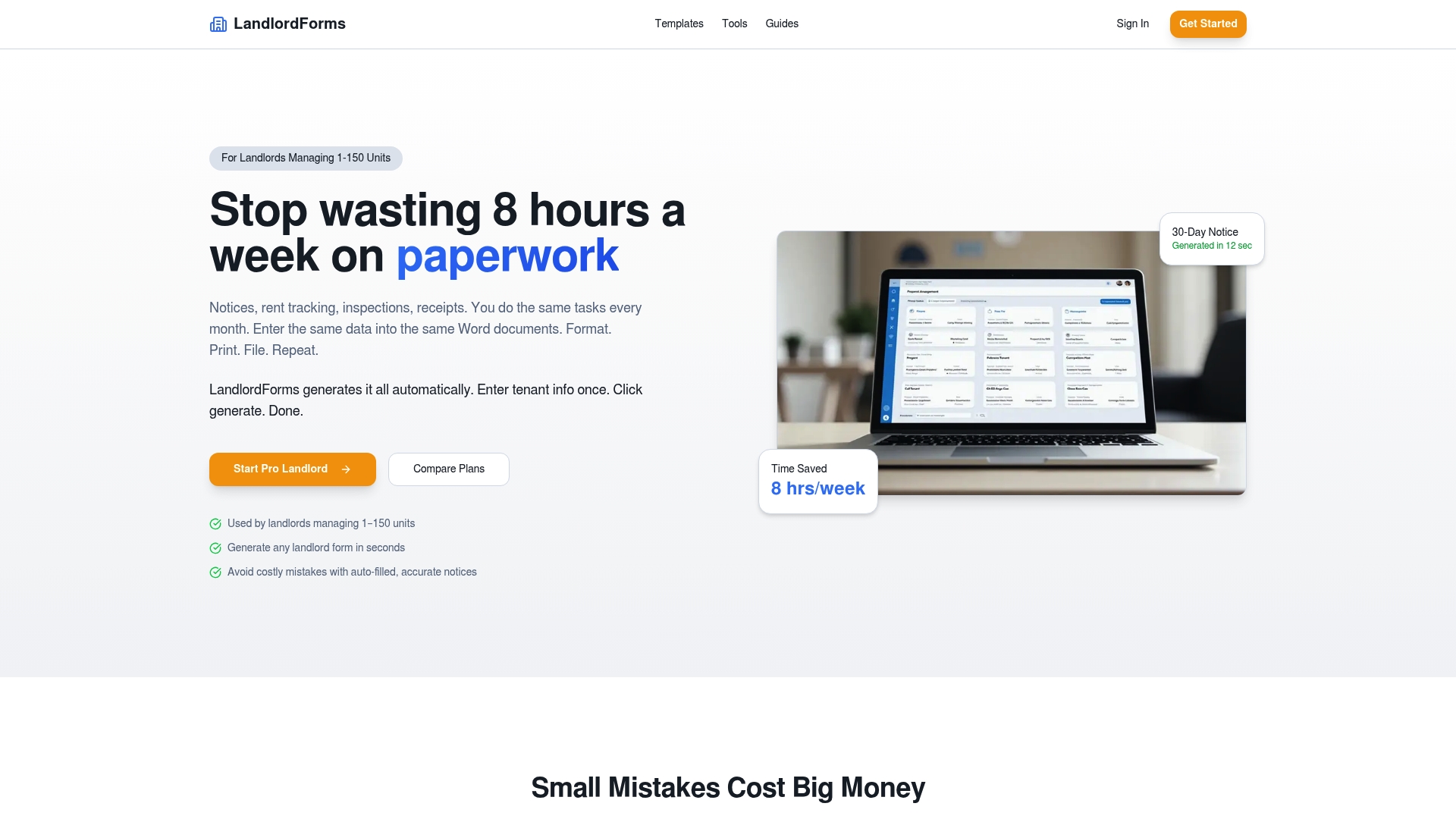
LandlordForms automates the parts of renewal season that eat your evening: the Lease Renewal Notice Template generator produces a formatted, state-aware letter in minutes, and it keeps your tenant records, rent history, and document trail organized in one place instead of scattered across email folders. If a lease date shifts mid-renewal, the rent proration calculator handles the math so you’re not doing it by hand at 11 p.m. Landlords managing anywhere from a single unit to 150 use it to skip the manual paperwork entirely. Generate your renewal letter now and have it ready to send today.
Sources
For federal fair housing rules on renewal terms, see HUD’s Fair Housing Act overview. For alternate wording and a second walkthrough of core components, see Buildium’s lease renewal guide. Always confirm notice periods against your state and local statutes before finalizing terms.
FAQ
When should I expect a lease renewal letter?
Most landlords send renewal offers 60 to 90 days before the lease ends, though some send as little as 30 days out depending on lease terms and local law.
How do I tell my landlord I want to renew my lease?
Reply in writing to their renewal letter or email, stating your intent to renew and confirming the new term and rent, then sign and return any renewal agreement they provide.
What does a lease non-renewal letter look like?
A non-renewal letter states the lease will end on its current expiration date, gives the tenant move-out instructions, and specifies a date to return keys and schedule a move-out inspection.
How do I write a rent renewal notice?
State the current lease’s expiration date, the new rent amount, the new term dates, and a clear deadline for the tenant to accept, then include signature lines for both parties. A free renewal template covers all of this automatically.