Property Manager Paperwork System: Cut Hours of Manual Work

TL;DR:
- A property manager paperwork system organizes, generates, and tracks rental documents to reduce manual data entry and errors. It uses automation tools like AI parsers, form builders, and integration platforms to improve efficiency and compliance. Proper setup involves auditing workflows, mapping data, and building phased automation for scalable portfolio growth.
A property manager paperwork system is defined as the combination of tools, workflows, and document templates that organize, generate, and track every rental document from lease agreements to maintenance logs. Without a structured system, manual data entry consumes 20–30 hours per month for managers handling 30–100 properties. That time cost compounds fast. Landlordforms is built specifically for landlords managing 1 to 150 units, replacing that manual grind with automated document generation and centralized tenant records. The right document management system, as the industry calls it, does more than save time. It reduces costly errors, supports compliance, and gives you back the hours you need to grow your portfolio.
What does a property manager paperwork system need to handle?
A complete document management system covers five core document types: lease agreements, tenant applications, inspection reports, maintenance logs, and owner reports. Each document carries specific data fields that must be captured accurately and consistently. Missing or mistyped data in any one of these fields creates compliance gaps and tenant disputes.

The table below maps each document type to its critical data fields.
| Document type | Core data fields |
|---|---|
| Lease agreement | Tenant name, lease start/end dates, rent amount, renewal options, security deposit |
| Tenant application | Applicant name, income, references, move-in date, prior rental history |
| Inspection report | Property address, inspection date, condition notes, photo references, inspector name |
| Maintenance log | Unit number, request date, issue description, assigned vendor, completion date |
| Owner report | Property address, income collected, expenses, vacancy status, period covered |
Structured data extraction matters because it converts raw documents into usable records. AI document parsers pull these fields automatically from PDFs and forms, eliminating the retyping that causes most errors. The bottleneck in most operations is not document storage. It is extraction. Once you solve extraction, the rest of the workflow follows cleanly.
How do you choose the right automation tools?
Automation tools for rental agreement management fall into three categories: AI document parsers, form builders, and integration platforms. Each solves a different part of the problem, and most landlords need at least two of them working together.
| Tool category | Best for | Key limitation |
|---|---|---|
| AI document parsers | Extracting structured data from PDFs and scanned leases | Requires setup and field mapping |
| Form builders | Collecting tenant data through web forms | Do not natively connect to most property management platforms |
| Integration platforms | Connecting form tools to your PMS automatically | Adds a layer of complexity for smaller portfolios |
General form builders do not natively integrate with major property management software platforms. That gap forces manual re-entry unless you build an automation bridge using a platform like Zapier or Make. The bridge maps form fields directly to your PMS records, so data flows without anyone touching a keyboard.
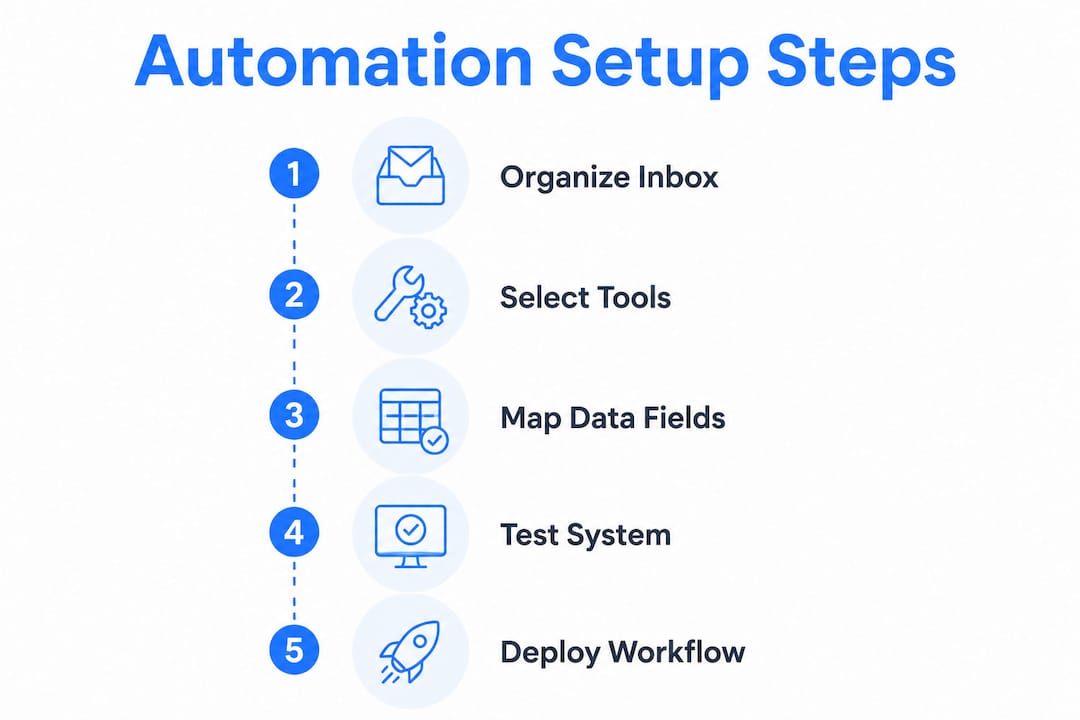
The setup process follows four steps. First, organize your document inbox so all incoming files route to one location. Second, select a parser model that matches your document types. Third, map each extracted field to the correct PMS field. Fourth, test the workflow with real documents before going live.
Pro Tip: For portfolios under 20 units, start with a structured filing system and a form builder before adding AI parsing. Automation setup produces the best return on investment for portfolios above 20–30 units, so match your tool complexity to your actual scale.
Many landlords assume their property management software handles all document needs natively. It rarely does. External form tools almost always require an automation bridge to prevent data from getting stuck between systems.
How to build a property manager paperwork system step by step
Building a working system takes preparation before any tool gets configured. Skipping the planning phase is the most common reason implementations fail.
-
Audit your current workflow. List every document type you handle, how it enters your system, and where data gets retyped. This audit reveals your biggest time drains and error sources.
-
Define your document types and required fields. Write down every field you need from each document. Lease start date, rent amount, tenant name, and renewal clause are non-negotiable minimums for a lease agreement.
-
Set up a centralized document inbox. Route all incoming documents, whether emailed PDFs, scanned forms, or digital submissions, to one folder or email address. This single entry point is what makes automated parsing possible.
-
Configure your parser and map fields. Load your document templates into your chosen parser. Map each extracted field to the matching field in your property management platform. Test with five to ten real documents before processing live data.
-
Generate legal PDFs from collected data. Collecting raw data through web forms and then generating fixed-layout legal PDFs automatically maintains required formatting standards. This separation of data collection from document generation is what keeps you compliant.
-
Train your team on the new workflow. Even a one-person operation benefits from written procedures. Document the steps so nothing falls through the cracks when you are busy.
-
Review error logs weekly for the first month. Every automation produces exceptions. Reviewing them early catches mapping errors before they create compliance problems.
Common mistakes to avoid include mapping fields to the wrong PMS columns, skipping the test phase, and ignoring the error review queue. Manual re-entry after automation defeats the entire purpose. If data is flowing back to a spreadsheet, the integration is broken and needs fixing.
Pro Tip: Build your system in phases. Get lease agreements and tenant applications automated first. Add inspection reports and maintenance logs in month two. Incremental rollout reduces errors and keeps your workflow efficiency improving steadily.
How does automation improve efficiency and compliance?
The efficiency gains from a well-built document management system are concrete and measurable. Manual lease abstraction takes 3–5 hours per document, totaling up to 250 hours annually for a 50-property portfolio. Automation cuts that dramatically.
Switching to AI extraction reduces labor time from 80 hours to 7 hours per year for a 200-unit portfolio, cutting costs by over 80%. Manual lease data entry labor costs for that same portfolio can reach $2,600–$3,200 annually before factoring in error correction.
That cost figure does not include the opportunity cost of lost tenant retention. Tenant turnover costs average $4,000 per unit, and management delays caused by paperwork backlogs are a direct driver of that turnover. Accurate, timely documents build tenant trust. Errors and delays erode it.
Compliance benefits follow the same logic. Structured, auditable records protect you in disputes. When every inspection report includes a date, a photo reference, and a condition note, you have a defensible paper trail. Document accuracy directly impacts tenant relations and your ability to enforce lease terms without going to court.
Firms using centralized automated leasing workflows manage up to four times the portfolio volume with the same staff. That ratio explains why automation is not just an efficiency tool. It is a growth strategy.
Key Takeaways
A property manager paperwork system built on automated document extraction and structured workflows cuts labor costs, reduces errors, and creates the compliance records that protect you in disputes.
| Point | Details |
|---|---|
| Define document scope first | Map all document types and required data fields before selecting any tool. |
| Extraction beats storage | AI parsers that pull structured data from PDFs eliminate the manual retyping that causes most errors. |
| Automation bridges are required | General form builders need integration platforms to connect with property management software. |
| Scale your setup to portfolio size | Portfolios above 20–30 units get the best return from full automation; smaller ones should structure first. |
| Compliance requires fixed-layout PDFs | Collect data through forms, then generate legal PDFs automatically to meet formatting standards. |
Why I think most landlords automate in the wrong order
Most landlords I have seen try to automate the wrong thing first. They buy a form builder, create a nice-looking tenant application, and then manually retype every submission into their spreadsheet. The form looks professional. The workflow is still broken.
The real bottleneck is always data extraction, not data collection. A form that does not connect to your records is just a prettier version of a paper application. The work still lands on your desk.
The other mistake I see constantly is treating document storage as the goal. Organized folders feel productive. But a well-labeled folder of PDFs you still have to open and read manually has not saved you any time. The goal is structured data that flows automatically into the right fields without anyone touching it.
My honest advice: start with your lease agreement. It is the document with the most fields, the highest error cost, and the clearest compliance requirements. Get that one document flowing automatically from signature to your records, and you will understand the entire system. Everything else is a variation on the same pattern.
The setup effort is real. It takes a few hours to map fields and test workflows. But manual work slows portfolio growth in ways that compound over years, not just months. The landlords who automate early are the ones who can take on 20 more units without hiring anyone new.
— Igor
Landlordforms tools that support your paperwork workflow
Landlordforms is built for landlords managing 1 to 150 units who want document generation without the manual entry. The platform automates 30-day notices, rent receipts, and other common forms, reducing human error and saving up to eight hours a week according to Landlordforms.
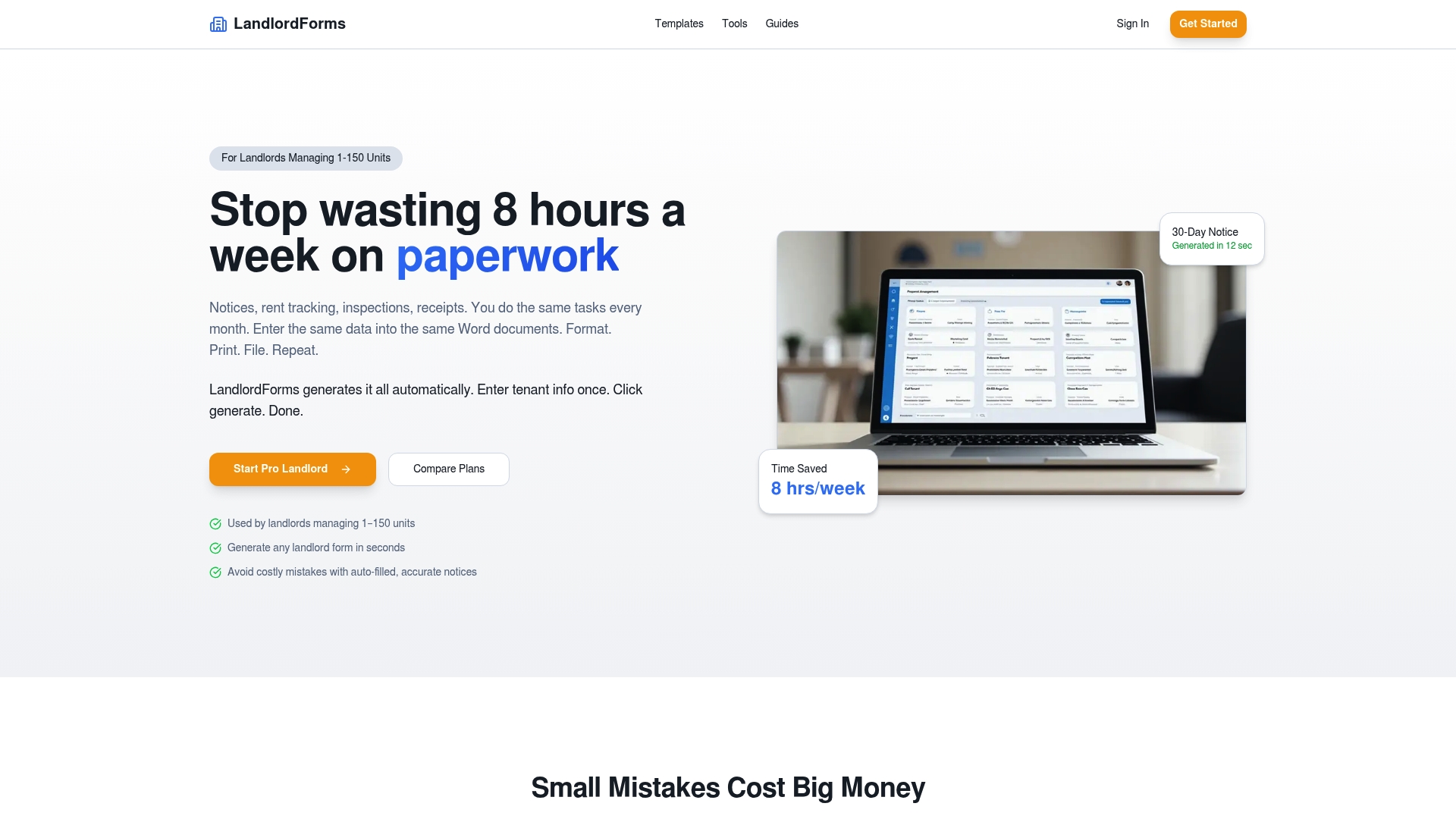
The free document templates cover the most common landlord forms and generate print-ready PDFs automatically. For rent tracking, the rent ledger template gives you a structured record of every payment without building a spreadsheet from scratch. Landlordforms also includes real-time rent payment tracking and photo documentation for inspections, so your records are ready if a dispute ever reaches a courtroom.
FAQ
What is a property manager paperwork system?
A property manager paperwork system is the combination of tools and workflows that organize, generate, and track all rental documents, including leases, applications, inspection reports, and maintenance logs. The goal is to eliminate manual data entry and maintain accurate, auditable records.
How much time does manual lease entry actually waste?
Manual data entry consumes 20–30 hours per month for managers of 30–100 properties. For a 50-property portfolio, manual lease abstraction alone can total up to 250 hours annually.
Do form builders replace property management software?
Form builders collect tenant data but do not replace property management software. They require automation bridges to connect with most PMS platforms and avoid manual re-entry bottlenecks.
When does automation make financial sense?
Automation produces the best ROI for portfolios above 20–30 units. Smaller portfolios benefit most from process structuring before adding AI parsing tools.
How does document automation support compliance?
Automated systems generate fixed-layout legal PDFs from collected data, maintaining required formatting standards. Structured, auditable records also provide a defensible paper trail for lease enforcement and tenant disputes.