Why Landlords Require Written Leases: Legal Protection

TL;DR:
- A written lease provides enforceable terms, protects landlord rights, and creates a clear evidence trail for disputes. Without it, landlords face challenges enforcing fees, deposits, and occupancy rules, often leading to legal and operational issues. Proper documentation and state-specific lease clauses are essential for legal enforceability and risk management.
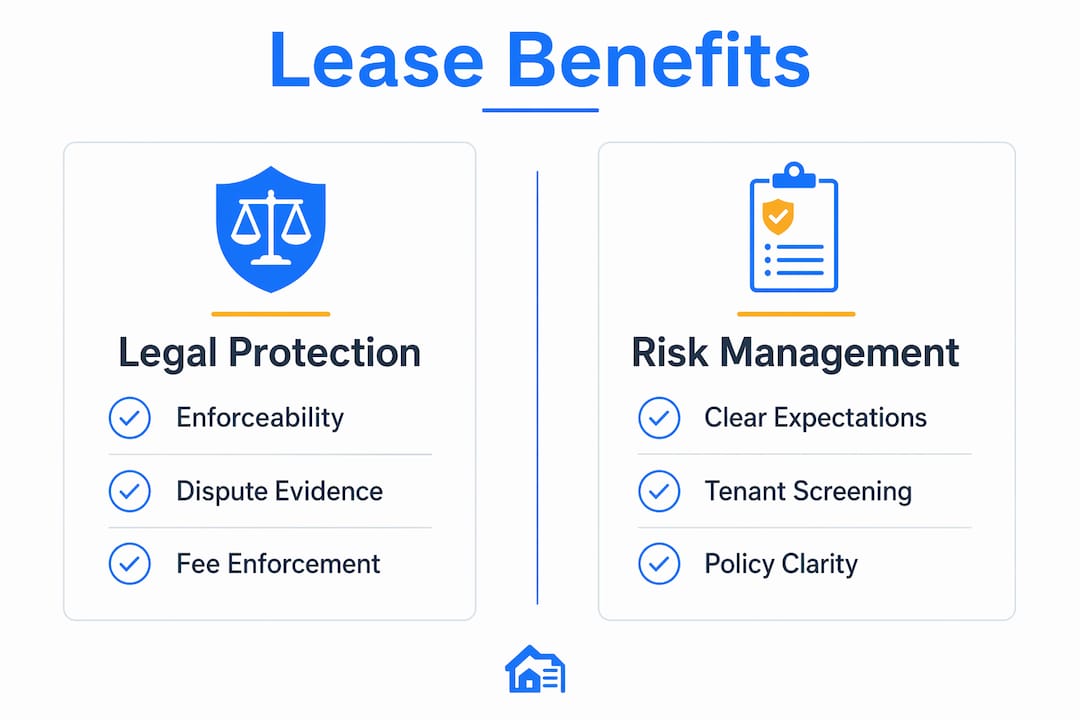
A written lease is the legally enforceable record of a tenancy that defines every term, protects your rights as a landlord, and gives you the evidence you need when disputes reach a courtroom. The two roots of that requirement are legal enforceability under the Statute of Frauds and practical risk management covering turnover, deposits, and policy enforcement. Tools like Landlordforms, federal standards like the Fair Housing Act, and state-specific rules all shape how that written record should look.
Table of Contents
- Practical advantages of a written lease
- Why written leases create legal enforceability
- What can go wrong without a written lease
- Key lease clauses landlords should include
- How to create, sign, store, and enforce a written lease
- When state or local rules require a written lease
- Key Takeaways
- The lease as your first line of defense
- Landlordforms makes the paperwork part easy
- Useful sources and next steps
- FAQ
Practical advantages of a written lease
A signed lease does more than satisfy a legal formality. It locks in the terms both parties agreed to before anyone moves a single box through the door.
- Enforceable fees and policies. A written lease lets you charge a documented late fee and enforce pet or smoking rules. Without it, courts treat these terms skeptically.
- Clear rent and term. Exact dollar amount, due date, and lease end date are on paper. No one can claim the rent was $50 less or the term was month-to-month.
- Security deposit protection. Documented deduction criteria and a move-in condition report give you the paper trail small claims judges expect before awarding deposit deductions.
- Eviction clarity. The lease spells out exactly which behaviors trigger default and what notice you must serve, so the eviction process follows a defined path rather than a guessing game.
- Occupancy stability. Fixed-term written leases reduce turnover compared with oral month-to-month arrangements, cutting the cleaning, marketing, and screening costs that eat into cash flow.
- Documentation for courts and insurers. A signed lease, paired with receipts and inspection photos, gives insurers and judges a complete picture of the tenancy from day one.
Written leases also function as proactive risk-management tools: setting expectations in advance reduces the frequency and cost of disputes before they ever require an attorney.
Why written leases create legal enforceability
Under the Statute of Frauds, residential leases longer than one year must be in writing to be enforceable in U.S. courts. An oral promise to rent for 18 months is essentially unenforceable. Courts will typically convert it to a month-to-month tenancy, stripping away the term protections you thought you had.
The writing requirement is less demanding than most landlords assume. Even a signed email or letter that identifies the parties, describes the property, and states the rent and term can satisfy the Statute of Frauds. A formal attorney-drafted document is better, but the threshold is a signed writing that captures the essential terms.
Courts also expect a documented evidence chain when disputes arise. The items judges look for most often:
- Signed lease agreement with all addenda
- Rent payment records and receipts
- Move-in and move-out inspection reports with timestamped photos
- Written notices served per the lease (entry, cure, termination)
- Any written amendments signed by both parties
That chain is what turns a dispute from a “he said, she said” standoff into a straightforward paper review. Oral agreements leave landlords at a disadvantage in exactly those standoffs; judges frequently favor the tenant when documentary proof is missing.
Pro Tip: Store a signed, timestamped PDF of every lease in at least two locations, one cloud-based and one local. Pair it with a landlord-tenant documentation log so every notice and receipt ties back to the original signed agreement.
What can go wrong without a written lease
Relying on a verbal agreement is not just legally risky. It creates operational headaches that compound over time.
- Unenforceable fees. No written late-fee clause means you likely cannot collect it. A tenant who disputes a $75 late charge wins by default if nothing is signed.
- Deposit disputes with no paper trail. Ambiguous or undocumented deposit deductions frequently lose in small claims court, even when the damage is real.
- Eviction complications. Without a written default clause, you may need to rely solely on statutory notice periods, which vary by state and can extend the process significantly.
- Unexpected turnover. A month-to-month oral arrangement gives a tenant the right to leave with minimal notice, leaving you scrambling to fill a vacancy.
- Ambiguous renewal terms. Did the tenancy auto-renew? For how long? Without a written renewal clause, both parties can argue different answers.
- Difficulty proving agreed rent. A tenant who claims the rent was $200 less than you charged has an equal voice in court when nothing is signed.
Three scenarios that play out regularly:
Pet policy denial. A tenant moves in under an oral agreement. Six months later they get a dog. You say pets were never allowed; they say you verbally agreed. Without a written no-pets clause, enforcing removal is an uphill fight. Put the rule in writing, get a signature.
Late-fee dispute. You charge a $50 late fee. The tenant refuses, saying no fee was ever discussed. A signed lease with an exact fee amount and grace period ends the argument before it starts.
Unauthorized occupant. A roommate moves in. You had no written occupancy limit. Proving a lease violation, let alone beginning eviction proceedings, becomes far more complicated without a documented occupancy clause.

Key lease clauses landlords should include
A properly prepared written lease nudges landlords to address every key issue before the tenancy starts. These are the clauses that matter most:
- Parties and property description. Full legal names of all adult tenants and the property address, including unit number.
- Lease term and renewal. Start date, end date, and whether the lease auto-converts to month-to-month or requires a new signed agreement.
- Rent amount, due date, grace period, and late fee. Example: “Rent of $1,400 is due on the 1st; a $50 late fee applies after a 5-day grace period.” Courts expect this level of specificity.
- Security deposit amount, permitted deductions, and return timeline. Example: “A $1,400 deposit will be returned within 21 days of move-out, less documented deductions for damage beyond normal wear and tear.” Many states cap deposits at one or two months’ rent, so cross-check your state’s limit.
- Maintenance and repair responsibilities. Who handles minor repairs? What is the tenant’s obligation to report issues promptly?
- Right of entry and notice. Most states require 24–48 hours’ written notice before a landlord enters. State the required notice period explicitly.
- Occupancy limits and subletting. Name every authorized occupant and prohibit subletting without written consent.
- Pets and smoking. A blanket prohibition or a specific pet addendum with breed/weight limits and a pet deposit.
- Default and remedies. What constitutes a lease violation, how many days to cure, and what triggers eviction proceedings.
- Notice periods and delivery methods. How notices must be delivered (written, certified mail, email if permitted by state law) and the required advance notice for non-renewal.
- Modification clause. Any change to the lease must be in writing and signed by both parties to remain enforceable.
Two clauses that frequently run afoul of state law: deposit caps and habitability waivers. Many states prohibit tenants from waiving the implied warranty of habitability, and failing to follow deposit rules and itemization deadlines can cause you to forfeit the deposit entirely and face statutory penalties. Always cross-check your state’s specific rules before finalizing these clauses. A security deposit return letter template can help you document deductions in the format courts and state statutes expect.
How to create, sign, store, and enforce a written lease
The directive is simple: draft a state-compliant written lease, get it signed by every adult occupant, record signatures and payment evidence, and follow the lease’s amendment clause for any changes. Here is the step-by-step process:
- Choose a state-specific template. Generic forms miss state-required disclosures (lead paint, bedbug history, utility allocation). Start with a template built for your state.
- Customize essential clauses. Fill in exact rent, deposit, term, late fee, occupancy limits, and any property-specific rules before anyone signs.
- Collect IDs and signatures from all adult occupants. Every adult who will live in the unit should sign. Tenant acknowledgment signatures establish joint liability and prevent “I never agreed to that” claims later.
- Conduct a move-in inspection with timestamped photos. Walk the unit together, document every existing condition, and have the tenant sign the inspection report.
- Collect first month’s rent and deposit; issue receipts. A signed receipt ties the payment to the lease and starts your payment record.
- Store the signed lease and receipts securely. Cloud backup plus a local copy. Tamper-evident timestamps on digital files matter if authenticity is ever challenged.
- Serve all notices per the lease and document delivery. Use certified mail or the delivery method your lease specifies, and keep proof of service.
- Follow the written amendment process for any changes. A verbal “we agreed to lower the rent by $50” is unenforceable. Both parties sign a written addendum.
Pro Tip: Pair a rent ledger with your signed lease so every payment is timestamped and traceable. If a non-paying tenant dispute escalates, that ledger is often the single most persuasive document in court. Landlordforms automates both the ledger and the notice generation, so the audit trail builds itself.
Landlordforms generates state-specific lease templates, captures signatures, automates 30- and 60-day notices, and stores photo inspection records in one place, making the eight-step process above a matter of clicks rather than hours.
When state or local rules require a written lease
The general U.S. rule is straightforward: the Statute of Frauds applies to leases over one year, making a written agreement legally required for enforceability. But state and local rules layer on top of that baseline in ways that catch landlords off guard.
California’s Civil Code, for example, enforces the Statute of Frauds for leases over one year and also mandates detailed rules on security deposits, habitability, and notice procedures. Texas property law has its own notice and deposit requirements. Many cities add rent-control ordinances, just-cause eviction requirements, and mandatory disclosure rules that apply regardless of lease length.
How to verify what applies to your property:
- State law library. The Texas State Law Library and equivalent resources in other states publish landlord-tenant law guides with the actual statutory text.
- State attorney general or housing department. Most publish plain-language landlord-tenant guides, including deposit caps and required disclosures.
- Municipal rent-control or licensing sites. If your city has rent stabilization or a rental registration requirement, the city’s housing department website is the authoritative source.
- HUD guidance. The U.S. Department of Housing and Urban Development publishes Fair Housing guidance relevant to lease clauses covering assistance animals and occupancy standards.
A short verification checklist before you finalize any lease:
- Look up your state’s Statute of Frauds text and confirm the threshold.
- Find your state’s deposit cap and itemization deadline.
- Review required disclosures: lead paint (pre-1978 housing), bedbug history, utility allocation, and any local additions.
- Confirm whether your city has rent-control or just-cause eviction ordinances that affect your default and termination clauses.
When a non-paying tenant situation escalates beyond the lease itself, understanding your options matters. A legal guide on non-paying tenant property sales can clarify how written agreements affect your position during enforcement or exit scenarios.
Key Takeaways
Written leases are the single most effective risk-management tool a U.S. landlord has, combining legal enforceability under the Statute of Frauds with documented evidence that protects rent, deposits, and policies in court.
| Point | Details |
|---|---|
| Statute of Frauds threshold | Leases over one year must be in writing to be enforceable in U.S. courts. |
| Court evidence chain | Keep the signed lease, payment records, inspection photos, and written notices together. |
| Essential clauses | Include exact rent, deposit terms, late fees, occupancy limits, and a written-amendment clause. |
| State and local rules | Verify deposit caps, required disclosures, and rent-control ordinances before finalizing any lease. |
| Landlordforms | Generates state-specific leases, automates notices, and stores photo inspection records to build your audit trail. |
The lease as your first line of defense
Most landlords I talk with treat the lease as a formality, something to sign and file away. That instinct gets expensive fast. The lease is not paperwork. It is the operating agreement for a business relationship that can last years and involve tens of thousands of dollars.
The disputes that drag on longest are almost never about big, obvious violations. They are about the $75 late fee nobody wrote down, the pet that “was always allowed,” the deposit deduction the tenant swears was never disclosed. Every one of those fights collapses immediately when the signed lease says exactly what was agreed. The landlords who rarely end up in small claims court are not the ones with the most aggressive clauses. They are the ones whose leases are specific, signed, and stored where they can find them in ten minutes.
One case that sticks with me: a landlord had a tenant dispute a carpet-replacement charge after move-out. The tenant claimed normal wear and tear. The landlord had a move-in inspection report with timestamped photos showing the carpet in good condition, a signed lease clause defining damage beyond normal wear and tear, and a receipt for the replacement. The case was resolved at the first hearing. Without any one of those three documents, the outcome would have been different.
Landlordforms makes the paperwork part easy
Eight hours a week on landlord paperwork is not unusual when you are managing leases, notices, receipts, and inspection records manually. Landlordforms cuts that down to a fraction by generating state-specific lease templates and automating the forms landlords use most.
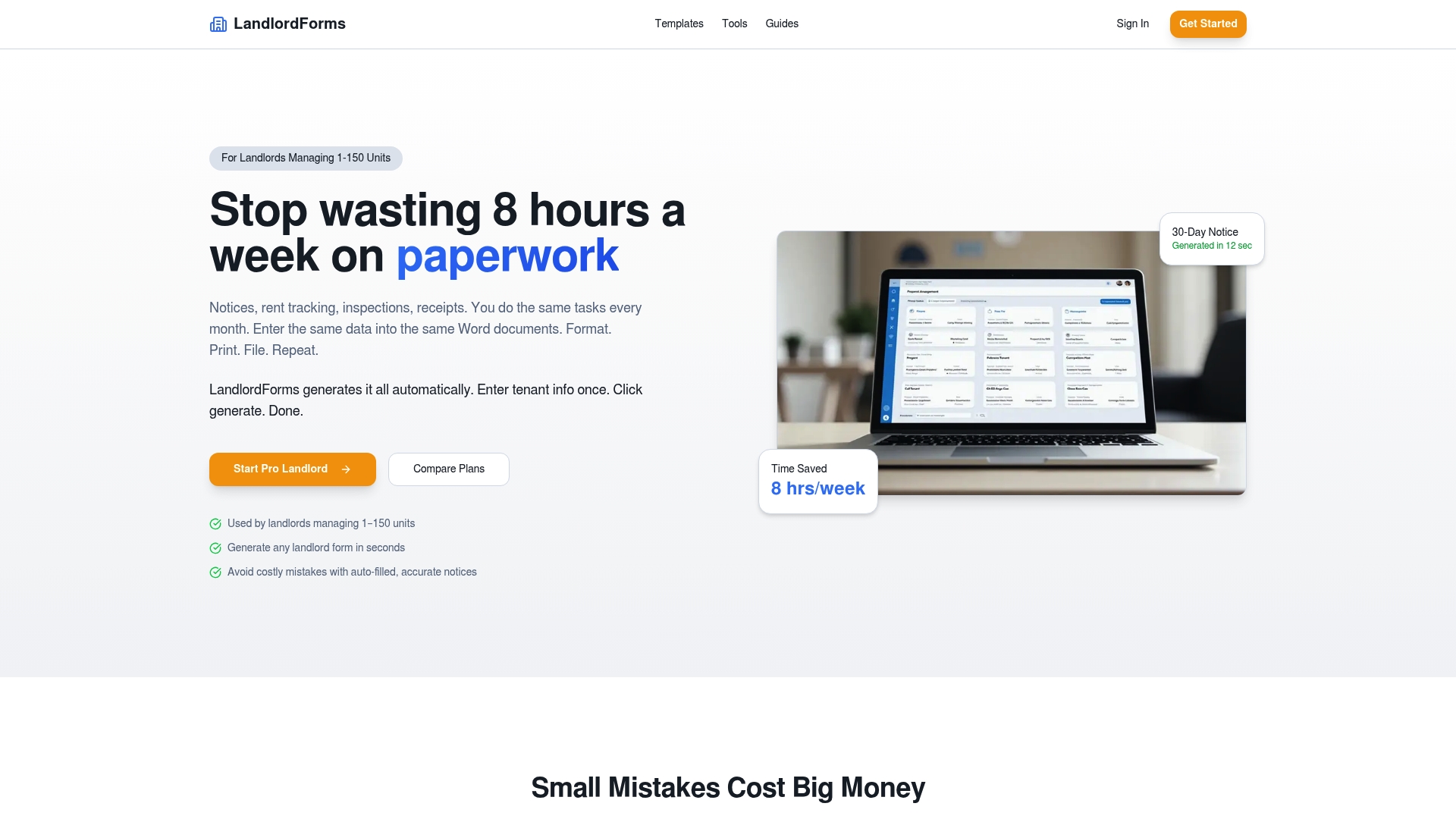
For landlords managing 1 to 150 units, the practical difference is real: instead of hunting for the right state disclosure or manually calculating a prorated rent figure, you generate a compliant document in a few clicks. Key features include state-specific lease templates, signature capture, automated 30- and 60-day notices, a rent ledger for payment tracking, photo inspection records, and document storage that keeps your evidence chain intact.
The free rent ledger template is a good starting point if you want to see how organized payment tracking changes your recordkeeping. For a broader set of tools, the landlord calculators handle late fees, proration, and rent increases without manual math. Landlordforms is a documentation and efficiency tool, not a substitute for legal advice. For lease clauses specific to your situation, consult a licensed attorney in your state.
Useful sources and next steps
- LegalClarity — Statute of Frauds and lease requirements: Check here for the writing requirement threshold and what a valid written lease must contain.
- Nolo — Lease vs. rental agreement: Plain-language explanation of fixed-term vs. month-to-month, and the risks of oral agreements.
- Texas State Law Library — Landlord/Tenant Law: Statutory text and guides for Texas; equivalent state law libraries exist for every state.
- California DRE — Landlord/Tenant Guide 2025: Detailed California-specific rules on oral vs. written agreements, deposits, and required disclosures.
- HUD — Fair Housing and assistance animals: Federal guidance on lease clauses covering assistance animals and occupancy standards.
- Thurman Law — Why landlords need a strong lease: Attorney perspective on enforceability and the specific clauses that hold up in court.
- Landlordforms — Lease templates and document automation: State-specific lease generation, notice automation, and inspection recordkeeping for landlords managing 1–150 units.
This article is general information, not legal advice. Confirm current rules with your state’s housing authority or a licensed attorney before finalizing any lease agreement.
FAQ
What are the main advantages of a written lease?
A written lease defines rent, term, fees, and policies in enforceable terms, gives you documentary evidence for court, and reduces turnover by locking in a defined tenancy period.
What happens if there is no written lease?
Without a written lease, courts often default to month-to-month terms, and landlords struggle to enforce fees, deposit deductions, or pet and occupancy rules because there is no signed proof of what was agreed.
When does a lease legally have to be in writing?
Under the Statute of Frauds, leases longer than one year must be in writing to be enforceable in U.S. courts; many states also impose additional written-disclosure requirements regardless of lease length.
What should every lease include?
At minimum: parties and property description, lease term and renewal terms, rent amount and due date, late fee and grace period, security deposit terms, maintenance responsibilities, right-of-entry notice, occupancy limits, and a written-amendment clause.
What are tenant rights in Florida without a written lease?
In Florida, a tenant without a written lease is presumed to have a month-to-month tenancy, with rights to proper notice before termination and basic habitability protections, but neither party has enforceable proof of specific agreed terms beyond the statutory defaults.