7-Year Retention: How U.S. Landlords Avoid Audits and Deposit Claims
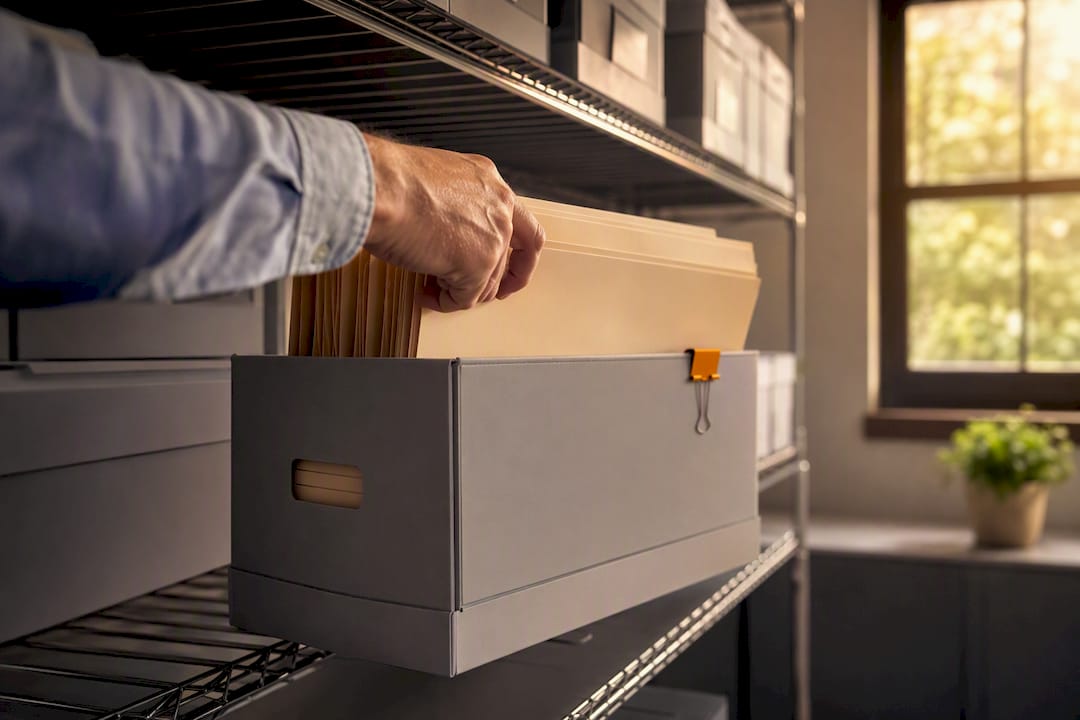
For U.S. landlords, seven years is the conservative default for keeping tax and tenant records. The IRS itself only requires three years for most returns, but state statutes of limitations and audit exceptions push the practical safe harbor to seven. Below, you’ll find the exact IRS minimums, state variations, and a category-by-category schedule you can implement this week.
TL;DR:
- Landlords should retain all key rental and tax documents for a minimum of seven years to cover the IRS audit window and state statutes of limitations.
- Important records include signed leases, security deposit records, rent ledgers, maintenance receipts, and inspection photos, all kept with a clear labeling system.
- Digital recordkeeping is fully acceptable if documents are scanned at a readable resolution, named consistently, backed up securely, and original deeds are preserved physically.
- Retention periods vary by state law, requiring landlords to retain tenant-related documents at least as long as the longest applicable statute of limitations plus one year.
- Regularly updating and automating a retention system, such as using tools like rent ledgers and digital files, helps prevent habit failures and ensures compliance over time.
Table of Contents
- How Long Should Document Retention for Landlords Really Be?
- What Records Should Landlords Keep, Category by Category?
- What Does the IRS Actually Require for Rental Property Records?
- How Do State Laws Change Retention Requirements?
- Should Landlords Keep Paper Records or Go Digital?
- When Is It Safe to Shred or Delete Old Records?
- How LandlordForms Simplifies Your Retention Schedule
- What Landlords Get Wrong About Retention
- Get Your Retention System Running This Week
- Where to Verify These Rules Yourself
- Sources
- FAQ
How Long Should Document Retention for Landlords Really Be?
Most landlords ask this question after something goes wrong. A former tenant disputes a security deposit deduction eighteen months after moving out. An accountant flags a depreciation schedule during tax prep and asks for records from three years back. A state agency sends a fair housing inquiry about an applicant who was denied.
None of these situations wait for a convenient time, which is exactly why document retention for landlords deserves a real policy instead of a vague sense that “I should probably keep this somewhere.” The IRS generally requires records for three years from filing, extending to six years if you underreport income by more than 25%, and indefinitely if you never filed a return or committed fraud. Employment tax records carry their own four-year minimum after the tax is due or paid.
State law adds another layer. A landlord in California faces a different statute of limitations on written contracts than one in New York or Texas, and rent-stabilized jurisdictions can extend recordkeeping expectations well beyond the federal baseline. Because the IRS’s extended audit window and most state statutes of limitations fall somewhere between four and six years, industry guidance around a seven-year retention period has become the practical standard. It’s not a legal requirement itself. It’s a buffer built from the overlap of several separate legal requirements.
Here’s the quick-reference version, organized by document type.
| Document Type | Recommended Retention | Why |
|---|---|---|
| Signed leases and addenda | 7 years after tenancy ends | Covers most state statutes of limitations on written contracts |
| Security deposit records | 7 years after return of deposit | Protects against deposit disputes and small-claims filings |
| Rent ledgers and payment history | 7 years | Substantiates rental income reported to the IRS |
| Tax returns and depreciation schedules | 7 years minimum; permanent for depreciation basis | IRS audit window extends to 6 years for underreporting |
| Maintenance and repair receipts | 7 years | Supports deductions and habitability defense in disputes |
| Move-in/move-out inspection photos | 7 years after tenancy ends | Primary evidence in deposit and condition disputes |
| Rental applications (accepted and denied) | Minimum 5 years, 7 recommended | Fair Housing compliance and discrimination claim defense |
| Insurance policies and claims records | 7 years after claim closure | Litigation and coverage dispute support |
| Ownership, deed, and closing documents | Permanent | Establishes basis for capital gains and depreciation |
Print this table or save it as a checklist next to your filing system. It won’t answer every edge case, but it covers the documents that generate the most disputes and audits.
What Records Should Landlords Keep, Category by Category?
A retention schedule is only useful if you know what actually belongs in each file. Here’s what to collect and preserve for the categories that matter most.
Leases and addenda. Keep the fully signed PDF, not just a scanned signature page. Preserve every amendment, renewal email, and initialed change separately, dated and labeled. If a tenant renews by email instead of signing a new lease, that email thread is now part of your lease file and needs to be saved with the same care as the original document.
Security deposits. This is where landlords lose disputes they should win, usually because the paper trail has gaps. Keep the original deposit receipt, itemized deduction statements with dated photos, and bank records showing the deposit was held and returned (or applied) correctly. A linked packet of move-in photos, move-out photos, itemized deductions, and vendor receipts is what actually wins a small-claims hearing. Loose, unlabeled photos with no timestamp are close to useless as evidence.

Rent payments. Ledgers matter more than most landlords realize until an accountant or auditor asks for them. Keep monthly rent ledgers, bank deposit records, and any payment-processor exports (Venmo, Zelle, or a dedicated rent payment tracking system) that show the date and amount of every transaction. Cash payments without a corresponding receipt are the single biggest gap in most landlords’ rent records.
Maintenance and repairs. Every work order, invoice, and parts list should be dated and tied to a specific unit and issue. Completion photos matter almost as much as the invoice itself, especially for habitability-related repairs like heating, plumbing, or mold remediation. If a tenant later claims a unit was uninhabitable, a dated repair invoice with a completion photo is often the strongest evidence a landlord has.
Tenant screening. Keep every rental application, credit and background report, and denial letter, whether the applicant was accepted or rejected.
- Retain denial documentation for multiple years to support Fair Housing compliance if a rejected applicant later files a complaint.
- Keep the criteria used for screening consistent and documented, not just the individual applications.
- Store denial reasons in writing, tied to the specific applicant and date, rather than relying on memory later.
Pro Tip: Screenshot or save a PDF of the exact ad or listing criteria you used when you screened an applicant. If a fair housing complaint surfaces two years later, showing your criteria didn’t change between applicants is often more persuasive than the application file itself.
What Does the IRS Actually Require for Rental Property Records?
The federal floor is lower than most landlords assume, which is part of why the seven-year rule exists as a buffer rather than a legal mandate. The IRS baseline is three years from the date you file your return. That window stretches to six years if you underreport gross income by more than 25%, and there’s no time limit at all if you never filed a return or if fraud is involved. Employment tax records, relevant if you pay a property manager or maintenance staff as employees, need to be kept at least four years after the tax becomes due or is paid.
A rental property audit typically requests the tax return itself, supporting Schedule E documentation, depreciation schedules tied to the property’s purchase price and improvements, and receipts for any deducted expense, from repairs to mileage to home office use. The IRS’s own guidance on rental real estate recordkeeping specifically flags travel and expense documentation as common audit triggers.
Audit readiness isn’t complicated, but it does require discipline. Link every major expense to the tax year it was deducted in. Keep your depreciation schedule updated annually rather than reconstructing it from memory when a CPA asks. If you claimed a home office deduction or vehicle mileage for property visits, keep the underlying logs, not just the total you reported.
How Do State Laws Change Retention Requirements?
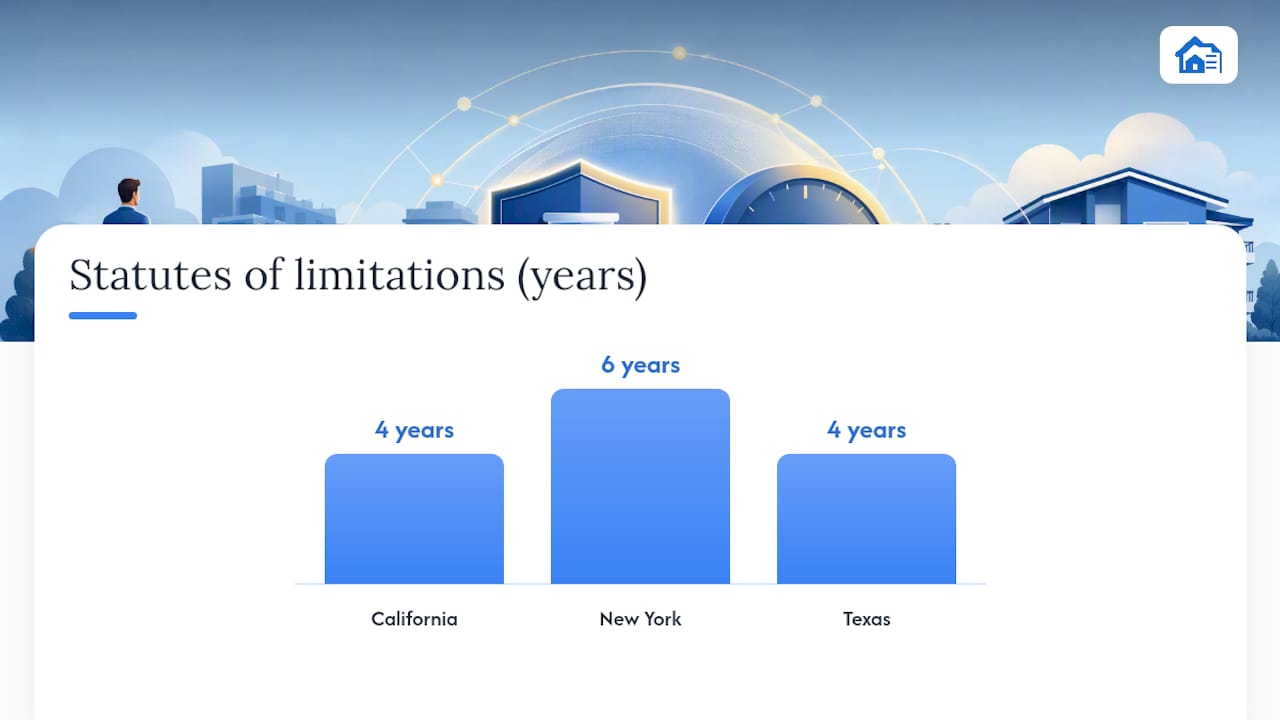
Federal rules set the floor, but state statutes of limitations often set a higher bar for how long you actually need to defend a lease dispute or deposit claim in court. A statute of limitations is the window during which someone can sue over a contract, and once it expires, most claims are barred entirely. Retention shorter than your state’s SOL means you could destroy the exact evidence you’d need to defend yourself.
The variation is significant enough that a one-size-fits-all national rule doesn’t quite work:
- California generally applies a 4-year statute of limitations to written contracts, including leases.
- New York extends that window to 6 years for breach of written contract claims.
- Texas sets a 4-year limit for written contracts, similar to California, though local rent-control ordinances in some cities can carry separate reporting or retention expectations.
- Rent-stabilized and rent-controlled jurisdictions, common in parts of New York and California, can require retention well beyond the standard SOL due to ongoing regulatory reporting.
An attorney-backed approach is to retain tenant files for at least as long as your state’s statute of limitations, plus a one-year buffer to account for filing delays or disputes that surface late. If you own property in multiple states, adopt the longest applicable period across your portfolio rather than tracking separate schedules per property. It’s simpler, and it protects you against the state with the strictest rule. When a dispute involves an unusual lease clause, a rent-control ordinance, or a complaint that’s already escalated, loop in local counsel or your accountant before deciding what to keep or discard.
Should Landlords Keep Paper Records or Go Digital?
The IRS accepts digital copies of tax-supporting records, which means there’s no requirement to keep paper originals for most documents once they’re properly scanned. A digital-first system with consistent naming and metadata makes a seven-year retention policy far less burdensome for landlords managing a handful of units, or 150 of them.
- Scan at a readable resolution with OCR enabled so documents are searchable, not just archived as images.
- Name files consistently, using a convention like
YYYY-MM-DD_Property_Tenant_DocType, so anyone searching your files six years from now can find what they need without opening every folder. - Organize by structure, not by year alone:
/Property > /Tenant > /Year > /DocumentTypekeeps related records grouped even as tenants and years accumulate. - Back up in two places, a cloud primary and an offsite or secondary cloud copy, with encryption and role-based access if you have a property manager or assistant handling files.
- Keep true originals of deeds, closing statements, and title documents in physical form even after scanning, since these establish your depreciation basis and ownership history permanently.
Pro Tip: Set retention reminders based on the tenant’s move-out date, not the file’s creation date. A lease signed in year one but active for four years needs its clock to start at move-out, not signing.
When Is It Safe to Shred or Delete Old Records?
Before purging anything, check for active triggers that should pause disposal regardless of how much time has passed: a pending audit, an unresolved tenant dispute, an open insurance claim, or a regulatory complaint. Any of these extends your retention obligation until resolution, even past your normal seven-year mark.
- Use certified shredding services for paper records containing Social Security numbers, financial data, or signatures.
- Use secure-wipe software with deletion logs for digital files, rather than simply moving them to a trash folder.
- Confirm no litigation hold, audit notice, or open dispute applies before deleting anything.
- Automate purge reminders tied to the retention date so old files don’t linger indefinitely or get deleted too early.
How LandlordForms Simplifies Your Retention Schedule
Building a seven-year retention habit is easier with the right infrastructure. LandlordForms centralizes tenant files, state-specific lease and notice generation, and rent ledgers in one place, so nothing lives in scattered email threads or a shoebox of receipts. Automated rent receipts and a rent ledger can create detailed payment histories helpful for IRS audits or deposit disputes. Photo-based inspection documentation that timestamps move-in and move-out conditions helps close evidence gaps in deposit disputes.
Many landlords report saving significant time each week by using structured systems to manage paperwork instead of manual methods. For a deeper walkthrough of digitizing your existing files, see how digital tenant file management works in practice.
What Landlords Get Wrong About Retention
Most retention failures aren’t legal mistakes. They’re habit failures. Landlords delete old tenant text threads to “clean up” a phone, or they save one lease as lease_final_v2.pdf and another as lease2024.docx, and six years later nobody can tell which version was actually signed.
The fix isn’t complicated: a weekly ten-minute scan-and-file habit, done consistently, beats any elaborate system attempted twice a year. Digital tools have made seven-year retention genuinely achievable for small landlords, something that felt unrealistic with filing cabinets.
— Igor
Get Your Retention System Running This Week
Waiting until tax season or a dispute to organize your records is how landlords end up scrambling through email attachments at midnight. This guide encourages adopting an automated retention schedule instead of managing it manually every month.

Start with the free rent ledger template, built to track every payment with the date and amount detail an audit or dispute actually requires. If you handle partial-month move-ins or move-outs, the rent proration calculator keeps those numbers clean and documented from day one. Both tools can integrate with broader systems that generate state-specific notices, store inspection photos, and keep tenant files centralized instead of scattered across email and paper. Download the ledger template today and build your seven-year archive one month at a time instead of reconstructing it under pressure later.
Where to Verify These Rules Yourself
For federal recordkeeping minimums, the IRS recordkeeping guidance and its rental real estate tips are the primary sources. State statutes of limitations vary, so confirm your state’s exact terms before finalizing a policy, and consult an attorney or accountant for high-stakes disputes, multi-state portfolios, or rent-controlled properties where local rules add complexity.
Sources
- How Long Should I Keep Records? | Internal Revenue Service
- Document Retention for Landlords: Federal and State Guide · DiscoveryMark
- Record Keeping for Rental Property Owners: Best Practices
- How Long Should A Landlord Save A Tenant’s Lease and Other Rental Documents? — Pettit Law Group S.C.
- How long do landlords keep rental records? | MRI Software
FAQ
What Is the 7-Year Retention Rule for Landlords?
It’s an industry-standard practice of keeping tenant and tax records for seven years, a buffer built to cover the IRS’s extended six-year audit window for underreported income plus most state statutes of limitations on written contracts.
What Records Need to Be Kept for 7 Years?
Leases, security deposit documentation, rent ledgers, tax returns, maintenance receipts, and inspection photos all fall under the seven-year default, while ownership and closing documents should be kept permanently.
How Long Should You Keep Rental Receipts?
Keep rent payment receipts and ledgers for at least seven years to align with IRS audit windows and to substantiate reported rental income if questioned later.
What Records Should Landlords Keep for Fair Housing Compliance?
Rental applications and denial letters, whether the applicant was accepted or rejected, should be kept for a minimum of five years, though seven years matches the broader retention default and adds protection against late-filed discrimination complaints.
Do I Need to Keep Paper Copies or Can I Store Everything Digitally?
The IRS accepts digital copies of most tax-supporting records, so a scanned, properly organized digital archive satisfies federal requirements; only deeds and closing documents are worth preserving in original physical form.