U.S. Landlords' Toolkit: 5 Records to Prove Smoke Detector Compliance
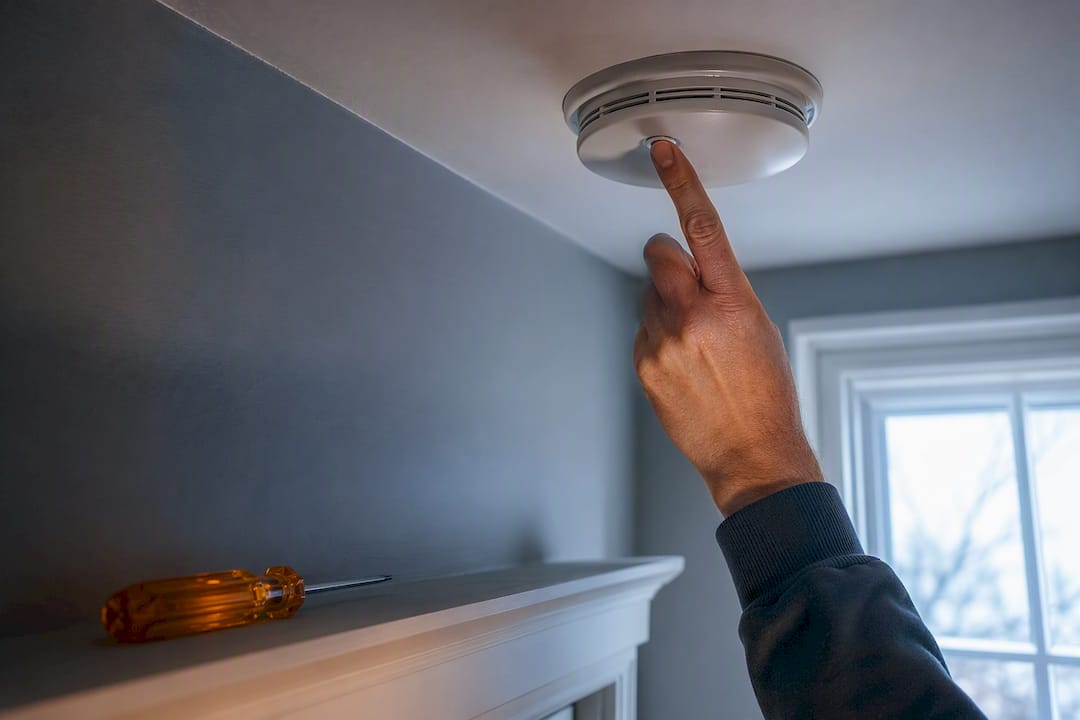
Proving smoke detector compliance comes down to five things: a signed move-in checklist, a dated inspection log, photos showing each device’s manufacture date and location, receipts for any repairs or replacements, and any state-mandated certification. Most states make landlords responsible for installing and initially testing alarms, though tenant duties for battery upkeep vary by statute; see this detailed explanation of landlord maintenance responsibilities for more insight. Keep every record in a consistent system, a dated folder per unit or a cloud record, so you can produce proof the moment an inspector, insurer, or attorney asks for it.
TL;DR:
- Most states assign landlords the responsibility for initial installation and testing, but maintenance duties like battery replacement vary and require careful tracking.
- Proper documentation includes signed move-in checklists with specific device details, ongoing inspection logs, and timestamped photos showing manufacture dates and locations.
- State-specific rules, such as Virginia’s requirement for annual certification and DC’s hardware and placement mandates, demand tailored compliance practices.
- Recording each alarm test, repair, and replacement thoroughly, with tenant signatures and timestamps, helps build clear legal proof in case of disputes.
- Automated records and forms streamline compliance management, reducing errors and ensuring quick access to critical documentation during inspections, lawsuits, or insurance claims.
Table of Contents
- Ready-to-Use Compliance Checklist and Downloadable Forms
- How State Smoke Alarm Rules Actually Differ
- Documenting Inspections and Replacements Step by Step
- Testing Cadence, Batteries, and Replacement Timing
- Responding to Tenant Reports and Building Dispute-Proof Evidence
- What Landlords Consistently Get Wrong About Compliance Paperwork
- Automate the Paperwork That Proves Smoke Detector Compliance
- Sources
- FAQ
Ready-to-Use Compliance Checklist and Downloadable Forms
A move-in checklist only works as legal evidence if it captures the right fields. Skip one, and you’ve got a document that looks thorough but proves nothing when a dispute lands in front of a judge.
Your checklist should include, at minimum:
- Unit address and device locations (bedroom, hallway, each floor)
- Test method used (push-button test, smoke test, or interconnection check)
- Test result and date
- Tenant signature and date, confirming they witnessed the test
For ongoing records, build an inspection log with separate columns for date, tester name, test method, result, and any corrective action taken. This is different from the move-in checklist. One document proves the starting condition; the other proves ongoing maintenance.
Photos matter as much as paperwork. Every photo should show the device’s back label with the manufacture date visible, plus the mounting location in context (ceiling height, distance from doorways). If your phone or camera embeds a timestamp, use it. If not, note the date in the filename.
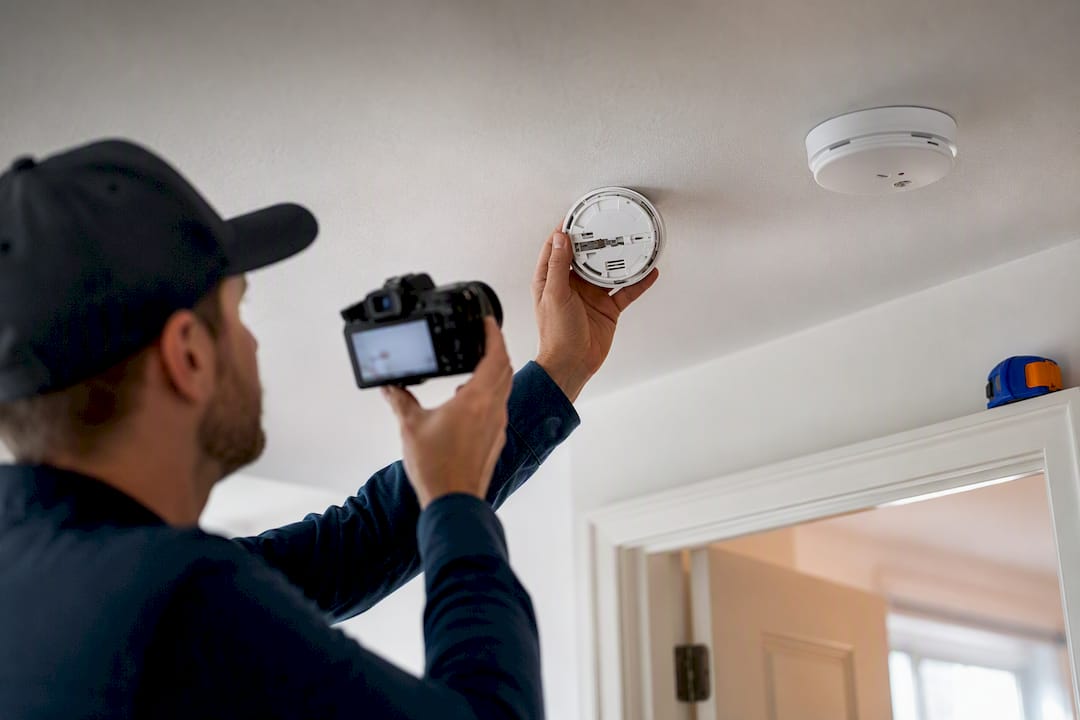
On storage, don’t scatter files across email threads and phone galleries. Name folders by property address, then by unit, then by year. A consistent format like 123Main_Unit2_2026_MoveIn beats a folder called “Photos” every time you need to find something fast.
Finally, attach a tenant acknowledgment clause directly to the lease or move-in packet rather than treating it as a separate, easy-to-lose form. A tenant acknowledgment signature does real legal work: it shifts the burden of proof onto a contemporaneous record instead of memory, which is exactly what you want if a dispute surfaces months later.
How State Smoke Alarm Rules Actually Differ
No single federal standard governs residential smoke alarms. States write their own rules, and the gaps between them are wider than most landlords assume.
Some states go well beyond “install a working alarm.” Virginia requires landlords to inspect smoke alarms and issue written annual certification to tenants confirming devices are present, inspected, and functioning. Miss that certification and you’re not just risking a fine. You’re missing the exact document that would clear you in a dispute.
The District of Columbia takes a different angle entirely. DC requires alarms in every sleeping room, outside sleeping areas, and on every floor, and many units must be hardwired with battery backup and interconnected unless you’re using listed wireless units. That’s a hardware requirement, not just a paperwork one, and it changes what your inspection log needs to capture.
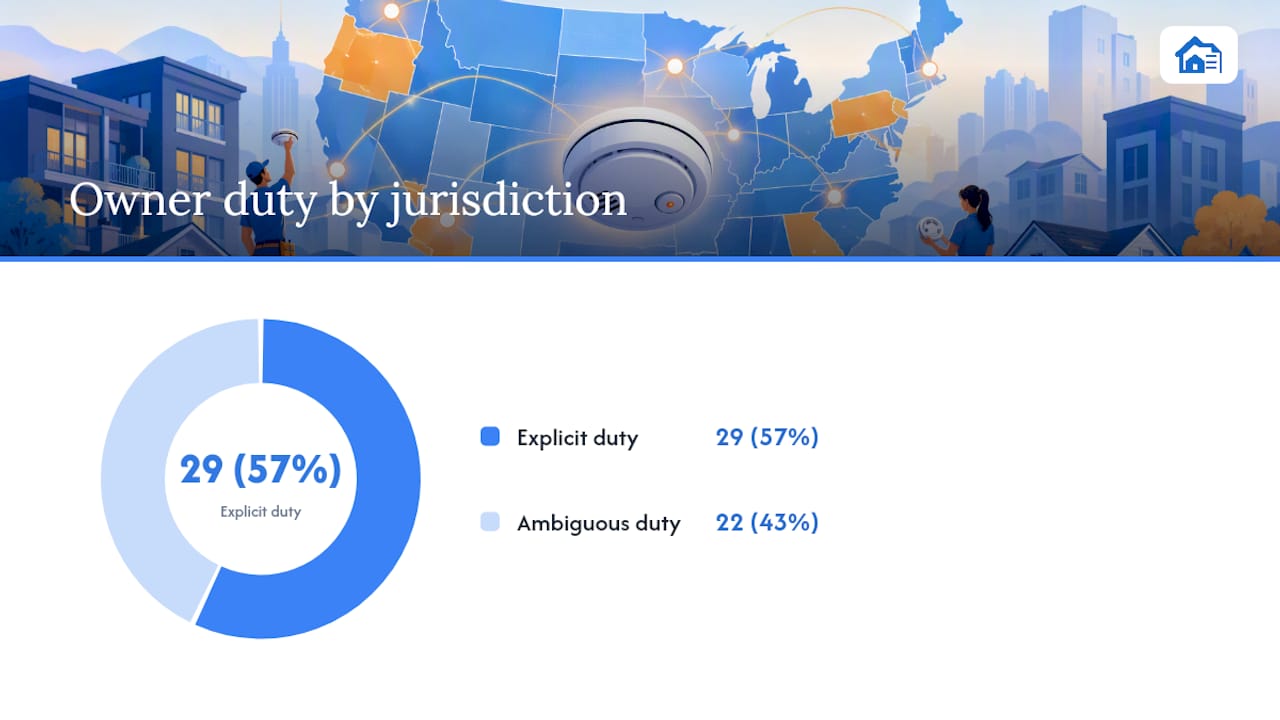
A broader review of state statutes found that 28 states plus DC have specific statutory language placing installation and initial maintenance duty on the property owner. The other states leave more ambiguity, which cuts against you if you’re ever challenged.
Before you assume your state’s rules are simple, check these variations:
- Placement rules — bedroom-only vs. every floor vs. outside each sleeping area
- Interconnection requirements — whether one alarm triggering must set off all alarms
- Hardwire vs. sealed-battery mandates — especially in older buildings undergoing renovation
- Carbon monoxide triggers — often tied to gas appliances or attached garages
Pull your state’s actual statute or your local fire marshal’s guidance page, save a copy or the citation with your property file, and when the rule is genuinely unclear, follow the stricter standard. It’s cheaper than a lawsuit.
Documenting Inspections and Replacements Step by Step
Good documentation isn’t a one-time event. It’s a repeatable workflow you run at move-in, on a testing schedule, and every time a unit gets replaced.
- Test every alarm at move-in, using the actual test button, not a visual check.
- Photograph the back label of each unit, capturing the manufacture date and serial number.
- Record the model, serial number, and location in your inspection log.
- Get the tenant’s signature confirming they witnessed the test and understand their own testing duties.
- Log every tenant report of a malfunction, with the date and time it was received.
- Document your response, including repair invoices, the installer’s name, and a photo of the replacement unit’s new manufacture date.
- Set a lifecycle alert tied to each device’s install date so you’re replacing it before the 10-year mark, not after a failure forces the issue.
That last step is where most landlords fall behind. A manufacture date isn’t a suggestion. It’s a hard end-of-life marker that fire departments and insurers both check after an incident.
Pro Tip: Set your replacement reminder for nine years, not ten. That one-year cushion covers scheduling conflicts, tenant access issues, and supply delays, so you’re never scrambling to beat a hard deadline.
Testing Cadence, Batteries, and Replacement Timing
Two different testing obligations run in parallel, and conflating them is a common mistake. Tenants are typically expected to press the test button monthly. Landlords should independently verify function at least annually, and document that verification separately from anything the tenant reports.
Track these on a fixed schedule:
- Monthly tenant test (encourage it in the lease, but don’t rely on it as your only record)
- Annual landlord-verified test, logged with date and result
- 10-year replacement rule for smoke alarms, per NFPA-aligned guidance that most states reference or adopt outright
- CO detector replacement, often shorter than 10 years depending on the manufacturer, so the manufacture date matters even more
NFPA guidance also recommends mounting alarms within 12 inches of the ceiling and testing monthly, standards that show up, directly or indirectly, in most state statutes.
Best practice: supply working batteries at move-in and document any tenant request for a battery replacement in writing, with a response date. That single habit closes off the most common tenant defense in a dispute: “I told them and nothing happened.”
Responding to Tenant Reports and Building Dispute-Proof Evidence
When a tenant reports a dead or malfunctioning alarm, your response speed and your paper trail both matter, sometimes more than the repair itself.
- Require written notice from tenants, even if the first report comes by text or phone call. Follow up in writing to create a timestamp.
- Log the exact date and time the report was received, not just the date you got around to it.
- Document the repair fully: invoice, installer name, and a photo of the new unit’s manufacture date.
- Know your state’s repair-and-deduct rules. In Texas and a handful of other states, tenants can act and deduct costs if landlords fail to respond within a set window, so slow responses carry real financial exposure.
Keep these records for several years, not just until the lease ends. Insurance claims and enforcement actions can surface long after a tenant has moved out.
What Landlords Consistently Get Wrong About Compliance Paperwork
The biggest misconception I see is landlords treating smoke detector compliance as a hardware problem. Buy the alarm, mount it, done. That’s backwards. The alarm is cheap and easy. The paperwork proving you installed it, tested it, and maintained it, is what actually protects you when something goes wrong.
Signed move-in checklists and dated photos don’t just satisfy a statute. They change the entire tone of a dispute. A tenant claiming an alarm never worked has a much weaker case against a signed document dated the day they moved in, with a photo of the manufacture date attached. Without that record, you’re arguing memory against memory, and landlords rarely win that argument.
The simplest fix is also the most overlooked: tie a calendar reminder to each device’s install date the moment you log it. Nine years out, not ten. That one habit prevents more liability than any amount of alarm hardware ever will.
— Igor
Automate the Paperwork That Proves Smoke Detector Compliance
Software platforms can turn the manual side of this process, checklists, inspection logs, tenant acknowledgments, into forms you generate in a few clicks instead of building from scratch every time you turn a unit.

The platform generates state-specific move-in and inspection forms, and stores your photo documentation with timestamps attached, so a device’s manufacture date and installation photo live next to the unit record instead of buried in a phone gallery. That matters most exactly when you need it: mid-dispute, mid-inspection, or mid-insurance claim, when you don’t have time to reconstruct a paper trail from memory.
If you manage even a handful of units, start with something free. The Rent Proration Calculator and the Rent Ledger Template both give you a low-effort way to see how Landlordforms organizes per-unit records before you commit to anything. Automating the paperwork side means fewer missed signatures, fewer lost photos, and a lot less scrambling the day someone asks you to prove compliance on the spot.
Sources
- Smoke and Carbon Monoxide Alarm Requirements | DCRA (District of Columbia)
- Smoke detector laws by state — compiled overview (Rhode Island)
- Texas Property Code §92.258 — landlord duties for smoke alarms
FAQ
Who Is Responsible for Smoke Detectors, Landlord or Tenant?
Landlords are generally responsible for installing working smoke alarms and verifying them at move-in; ongoing battery maintenance duties for tenants vary by state, so check your state’s specific statute.
How Often Should Landlords Document Smoke Alarm Inspections?
Document at move-in, then verify and log at least annually, on top of any tenant-reported issues that come up in between.
What Proof Do I Need if a Tenant Disputes a Smoke Alarm Was Working?
A signed move-in checklist, a dated inspection log, and a photo showing the device’s manufacture date and location together form the strongest evidence of compliance.
When Should I Replace a Smoke Detector?
Replace smoke alarms within 10 years of the manufacture date printed on the unit’s back label, and check carbon monoxide detectors more frequently since many have shorter lifespans.
Can Landlordforms Generate State-Specific Compliance Forms?
Some software automates move-in checklists and inspection logs by state, and stores timestamped photo documentation alongside each unit’s record for quick retrieval during disputes or inspections.