Enforce Rent Repayment: 8-Point Payment Plan Checklist for U.S. Landlords

A rent payment plan needs to be a written, signed installment agreement or lease amendment that spells out exact amounts, dates, payment allocation, and default consequences. Put it in writing, add eviction-forbearance language if that is your intent, and track every payment with receipts or ledger entries. Clear clauses on default, acceleration, and how payments get applied are what make the plan enforceable later.
TL;DR:
- Detailed payment plans must specify exact amounts, dates, allocation rules, and default consequences to be enforceable in court.
- Writing and signing the agreement, referencing the original lease, and maintaining thorough payment records are essential to protect against disputes.
- Clear default and acceleration clauses, along with a fixed payment order, prevent misapplication of payments and strengthen legal enforceability.
- Using automated document tools and consistent recordkeeping reduces errors, especially when managing multiple rental units, and facilitates efficient enforcement.
- A court stipulation offers stronger legal backing for enforcement than a private agreement, especially if eviction proceedings are already underway.
Table of Contents
- What Belongs in Rent Payment Plan Documentation?
- How Do You Draft a Payment Plan That Holds Up?
- What Records Prove the Payment Plan Was Followed?
- Court Stipulation or Private Agreement: Which Do You Need?
- Fair Documentation Protects Both Recovery and Reputation
- Generate Payment Plan Documents Without Starting From Scratch Each Time
- Where to Learn More
- Sources
- FAQ
What Belongs in Rent Payment Plan Documentation?
A payment plan document is only as good as the details it nails down. Miss a field and you have handed a tenant’s lawyer, or a judge, a reason to question the whole arrangement. Here is what a solid rent payment plan letter or installment agreement needs to include:
- Party and property identification matching the original lease exactly — same names, same unit address, same landlord entity.
- Exact arrears breakdown, separating rent owed from late fees or other charges, with a total stated as of a specific date.
- Repayment schedule listing calendar dates and dollar amounts, and stating clearly whether installments sit on top of regular rent or replace it temporarily.
- Payment method and routing, including whether arrears payments go through a separate reference number or account so they never get mixed up with current rent.
- Allocation rules specifying the order payments get applied: current rent, then oldest arrears, then fees.
- Default definition and cure period (commonly three to five days) plus an acceleration clause spelling out exactly what happens if a payment is missed.
- Non-waiver and forbearance language stating that accepting plan payments does not waive the landlord’s right to pursue eviction unless the agreement says otherwise.
- Integration clause and signatures from everyone named on the original lease, delivered in a way that creates a paper trail (email with a timestamp, certified mail, or a signed hard copy).
This checklist mirrors what enforceable rent repayment agreements actually contain: party identification, arrears totals, a dated schedule, and default consequences. Skip any one of these fields and you create an opening for a tenant to argue the terms were unclear or that they never agreed to a payment order that let you apply their money differently than expected.
How Do You Draft a Payment Plan That Holds Up?
Getting the legal mechanics right matters as much as the checklist. Under the Statute of Frauds, agreements that modify lease terms over an extended period are far safer in writing and signed by every party. Verbal understandings about “catching up next month” evaporate the moment there is a dispute. You also need mutual consideration: you are agreeing to forbear from eviction, and the tenant is agreeing to a defined payment schedule. That trade is what makes the amendment a real contract rather than a favor you can revoke on a whim.
Here is a practical sequence for building the document:
- State the default trigger precisely. Define what counts as a missed payment (a specific date, not “on time”) and give a short cure window before the plan is void.
- Write the acceleration clause plainly. Say that a default lets you demand the full remaining arrears immediately and, where allowed under your lease and state law, pursue eviction. Well-structured repayment agreements typically pair an acceleration clause with an explicit non-waiver statement so accepting payments never quietly cancels your eviction rights.
- Fix the payment allocation order. Apply payments to current rent first, then the oldest arrears, then fees. This order, confirmed as standard practice for avoiding allocation disputes, keeps a tenant from accusing you of manufacturing a default by applying their payment somewhere they did not expect.
- Decide on notarization. Most residential rent plans do not need a notary, but an electronic signature platform that logs timestamps and IP addresses gives you a stronger audit trail if you end up in court.
The most common mistakes are dates written as “the 1st of each month” with no year specified, missing a signature from one leaseholder, treating the plan as a stand-alone deal disconnected from the lease it modifies, and vague language about which balance a payment covers.
Pro Tip: Reference the original lease by date and unit number directly in the payment plan’s opening line. That single sentence is what turns a side letter into a legally connected amendment instead of a document a court can dismiss as unrelated.
What Records Prove the Payment Plan Was Followed?
Documentation only protects you if you can produce it months later, in the middle of a hearing, when memories are unreliable and tenants dispute what they paid. Build the habit now, not after the first missed payment.
- Issue a dated, signed receipt for every single payment, and keep a copy for yourself as well as the tenant.
- Maintain a dedicated rent ledger with columns for date, amount, allocation (current rent vs. arrears vs. fees), payment method, and a reference number tied to the plan.
- Favor traceable payment methods: ACH transfers, a tenant portal, or a cashier’s check, and require a specific reference code for arrears installments so nothing gets lost in a general rent deposit.
- Keep the full audit trail together: the signed agreement, proof of delivery (certified mail receipt or email timestamp), every payment receipt, bank confirmations, and inspection photos if the unit’s condition is part of the dispute.
Putting the arrears schedule in writing and tracking each payment with receipts, ledger entries, and timestamps is the strongest protection landlords have if a dispute or eviction hearing follows. Landlords managing multiple units by hand in a spreadsheet often lose track of which payment covered which month, especially across five or six properties at once. A rent tracking spreadsheet vs software comparison usually comes down to volume: a spreadsheet works for one or two doors, but automating receipts and ledger entries reduces human error and produces court-ready records with far less effort once you are managing a real portfolio. Some software tools build this into the workflow directly, generating receipts and updating the ledger automatically each time a payment posts, which matters most for landlords running larger portfolios where manual tracking breaks down fast. For more on why this habit matters even for a single rental, see why landlords keep payment records.
Court Stipulation or Private Agreement: Which Do You Need?
A private payment plan and a court stipulation solve different problems, and picking the wrong one costs you time later. A private agreement is a contract between you and the tenant. If they default, you generally have to start a new eviction filing based on the breach. A stipulation entered in an existing eviction case becomes part of a court order, and that court-backed status allows faster enforcement than a private agreement alone if the tenant misses a payment.
Reach for a court stipulation when:
- The tenant is already in active eviction proceedings and you want the case resolved with judicial oversight rather than left open.
- You want certainty that a judgment or right to possession is already established if the plan fails.
- You want the judge, not just you, holding enforcement power over the schedule.
Typical stipulation terms landlords negotiate include the payment schedule itself, whether a money judgment is entered immediately or held pending completion, and whether that judgment gets vacated once the tenant pays in full. If you go this route, bring your signed agreement and payment records to court, ask the clerk about local stipulation forms, and be specific about vacatur terms. Courts read stipulation language literally, so vague wording that seemed fine in a private letter can create real problems once it is part of an order. When a plan collapses and you need to move to enforcement, our eviction process documentation guide walks through the next steps.
Fair Documentation Protects Both Recovery and Reputation
Landlords who treat payment plan documentation as a formality usually regret it the first time a tenant disputes what they owe. Getting the paperwork right isn’t about distrust. It’s about removing ambiguity before it becomes a fight neither side can win cleanly.
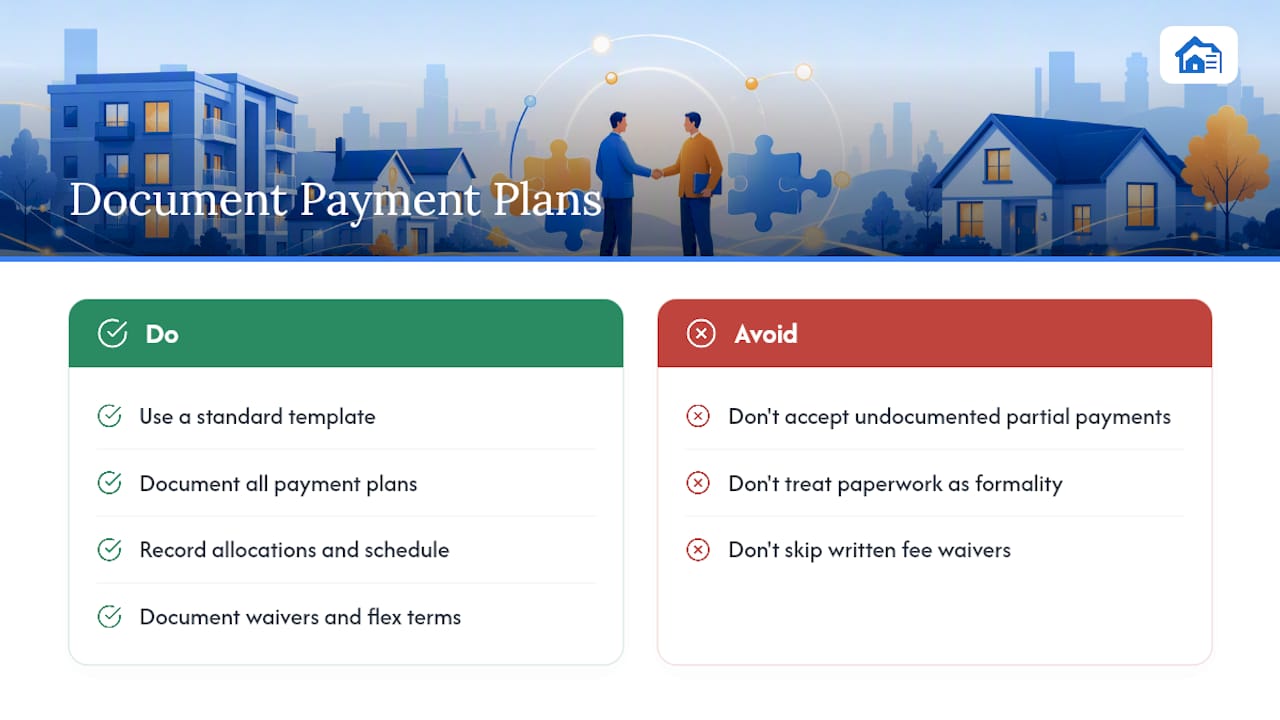
Flexibility has its place. A short plan, or even a one-time late fee waiver, can keep a decent tenant in place and your unit generating income instead of sitting vacant during a turnover. But that flexibility only works if it is documented with the same rigor as a strict enforcement case. The moment you accept partial payments without a written schedule and clear allocation terms, you have made your own position harder to defend.
The practical fix is boring but effective: build the paperwork once, with a standardized template, and reuse it. It saves time and removes the guesswork that turns small disputes into expensive ones.
— Igor
Generate Payment Plan Documents Without Starting From Scratch Each Time
LandlordForms turns payment plan documentation into a few clicks instead of a Saturday spent formatting a Word document. The platform automates payment plan letters, receipts, and lease amendments, and keeps every tenant record centralized so you are not hunting through email threads to find the last signed agreement. That matters most once you are managing more than a handful of doors, where manual tracking starts eating hours you don’t have.
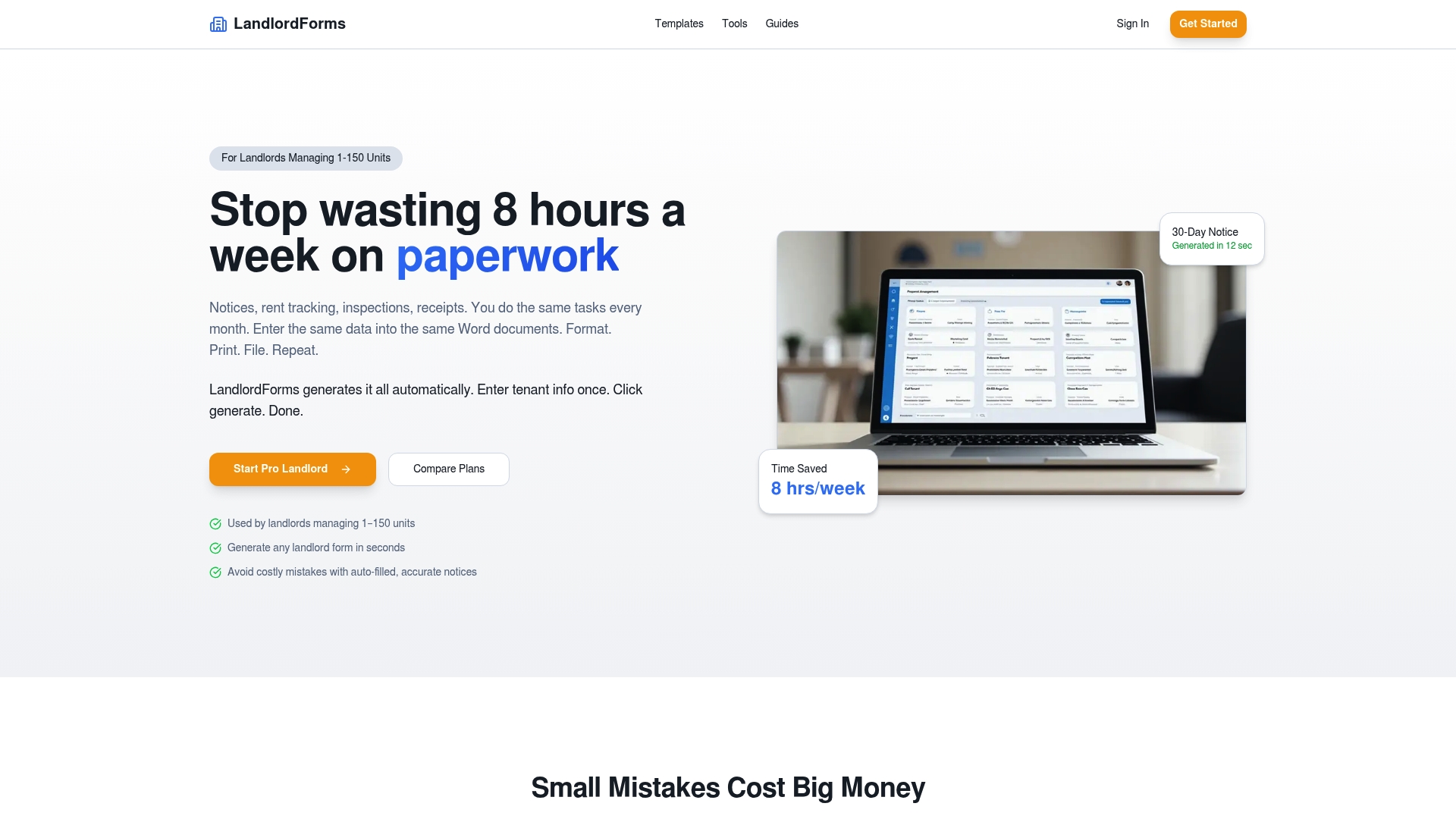
Free templates are available with no account required, so you can pull a rent ledger or a payment plan letter today. When you are ready to automate document reuse across multiple properties and get real-time payment tracking, the Starter Landlord plan runs $9 a month and covers exactly the kind of recordkeeping this article walks through. Grab the free rent ledger template now, or start a Starter Landlord subscription to automate the whole process going forward.
Where to Learn More
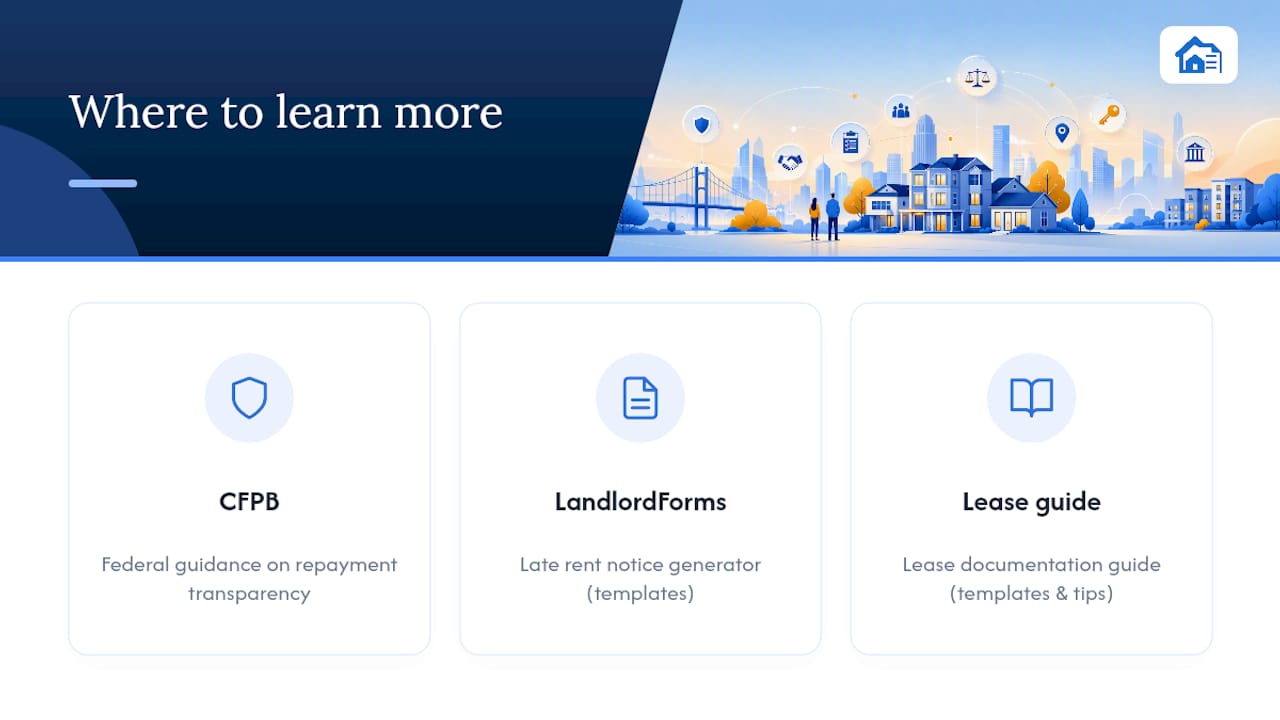
For federal guidance on repayment transparency and consumer-facing repayment practices, see the Consumer Financial Protection Bureau. For hands-on templates, browse LandlordForms’s late rent notice generator and the lease documentation guide.
Sources
- Rent Payment Plan: How to Write an Enforceable Agreement - LegalClarity
- Rent Repayment Agreements: Structuring Payment Plans - LegalClarity
- Payment Plans for Past Due Rent: Reduce Defaults | MRI Rent Payment
- Consumer Financial Protection Bureau
FAQ
Is a Verbal Rent Payment Plan Legally Enforceable?
A verbal arrangement is much harder to enforce because there is no signed record of the amounts, dates, or allocation terms both sides agreed to. Courts and legal guides consistently recommend a written, signed agreement specifically because verbal terms are nearly impossible to prove later.
What Is the Difference Between a Lease Amendment and a Standalone Payment Plan?
A lease amendment formally modifies the existing lease and stays legally tied to it, while a standalone agreement operates as a separate contract addressing only the arrears. Tying the payment plan to the original lease through an integration clause avoids arguments that the new terms are disconnected from the tenancy itself.
Does Accepting Partial Rent Payments Waive My Right to Evict?
Not if your agreement includes a non-waiver clause stating that accepting installment payments does not cancel your eviction rights. Without that clause, courts in some situations may treat continued acceptance of partial payment as an implied waiver, so the explicit non-waiver language is essential.
How Long Should a Rent Payment Plan Last?
Most practical repayment plans run six to 12 months, balancing a tenant’s ability to catch up against a landlord’s exposure to further default. Shorter plans lower your risk window but demand larger installments, so the right length depends on how much is owed and the tenant’s income stability.
Can LandlordForms Generate a Payment Plan Agreement for Me?
Yes. Some platforms automate payment plan letters, receipts, and rent ledgers, and let you track installments in real time across multiple units. Free templates require no account, and paid plans start at an affordable monthly fee.